Last updated October 15, 2026
DIY vs Professional ADU: The Ventura Homeowner’s Decision Guide
Owner-builder ADU stories usually go one of two ways. There’s the homeowner who saved $18,000 doing their own tile, paint, and landscaping, and ended up with a rental unit that cash-flows beautifully. Then there’s the one who pulled their own permit, botched the electrical rough-in, failed two inspections, and paid a licensed contractor 40% more than the original bid to tear out and redo the work. This guide draws the line between those two outcomes for Ventura homeowners, so you know exactly which ADU tasks are safe to take on yourself, which ones California law says you can’t, and where the real money gets saved or lost. For how to hire an ADU contractor in Ventura: a step-by-step guide, see our dedicated resource.
Quick Answer
Most Ventura homeowners should take a hybrid approach to ADU construction: hire a licensed general contractor for the structural, electrical, plumbing, and HVAC work that requires permits and inspections, and consider doing finish work like painting, tile, landscaping, and cabinet installation yourself if you have real construction experience and patience. California law does allow owner-builders to pull permits, but the legal liability and inspection risk make full DIY a bad bet for most people, especially if there’s any chance you’ll sell within five years.
Table of Contents
- What California Law Actually Allows for Owner-Builder ADUs
- The Licensed-Trade Firewall: What You Can’t DIY in Ventura
- Realistic DIY Savings: What Finish Work Actually Saves You
- The Inspection Risk Model: How Failed Inspections Eat Your Savings
- How to Structure a Hybrid Approach That Actually Works
- Ventura-Specific Code and Permit Considerations
- What to Put in the Contract for a Hybrid ADU Build
- Common Mistakes to Avoid
- When to Call a Professional
- Frequently Asked Questions
- The Bottom Line
What California Law Actually Allows for Owner-Builder ADUs
Here’s the part most online guides skip: California Health and Safety Code Section 17910.5 lets property owners act as their own general contractor on a residential project, including an ADU, as long as the unit is intended for their own use or rental and they do the work themselves or with their own employees. That’s the legal hook that makes owner-builder ADUs possible in Ventura. But the statute also carries a clause that flies under the radar: if you pull an owner-builder permit and then sell the property within five years, you may be personally liable for construction defects discovered after the sale. That’s not a theoretical concern. We’ve seen Ventura homeowners try to sell two and three years after an owner-builder ADU, only to have the buyer’s inspector flag issues that became the seller’s problem to fix before close.
So the question isn’t whether you can be an owner-builder in Ventura. You can. The question is whether you want the personal liability exposure that comes with it. A licensed contractor carries their own liability insurance and is required to stand behind their work under California contractor law. An owner-builder stands behind their own work, personally, for years.
What an Owner-Builder Permit Entitles You to Do
Under an owner-builder permit in Ventura, you can legally:
- Act as the general contractor and hire licensed subcontractors directly for each trade
- Pull building permits through the City of Ventura Building and Safety Division
- Do the physical construction work yourself, including trades that would otherwise require a license, as long as the work meets code
- Occupy or rent the completed ADU
But there’s a catch that matters more than most people realize. When you sign an owner-builder permit declaration in Ventura, you’re signing a document that says you understand the work will be inspected, that you’re responsible for correcting code violations, and that you’ve verified your subcontractors are properly licensed if you hire any. If you hire an unlicensed worker and they get hurt on your property, your homeowner’s insurance may not cover the injury because the work was performed outside a licensed contractor relationship. That’s a genuine financial exposure, not a scare tactic.
The Licensed-Trade Firewall: What You Can’t DIY in Ventura
Here’s where the law draws a hard line, and it’s not where most homeowners assume it is. California’s Contractor State License Board requires a licensed contractor for any work on a project where the total labor and materials exceed $500, unless you’re working under your own owner-builder permit. That’s the legal firewall. But practically speaking, certain scopes inside an ADU build are so tightly regulated that even an experienced DIYer hits a wall.
Trades That Require a Licensed Professional by Law
- Electrical rough-in and panel work: California requires a C-10 electrical contractor for any wire connection to a panel, any new circuit, and any work inside a main service panel. The Ventura building department will not sign off on owner-performed electrical work without a licensed electrician pulling the permit.
- Plumbing rough-in and gas lines: A C-36 plumbing contractor is required for gas line installation, sewer connection, and any plumbing that ties into the city’s main lines. Ventura’s coastal groundwater conditions also mean soil corrosion resistance matters more here than inland.
- HVAC installation: A C-20 warm-air heating, ventilating, and air-conditioning contractor must handle any new ducted or mini-split system. Refrigerant handling is federally regulated under EPA Section 608, and the fines for unlicensed handling run into five figures.
- Structural framing changes: Any modification to load-bearing walls, roof structure, or foundation requires a licensed contractor or a California-licensed structural engineer’s sign-off. This is the part where DIY attempts most often fail inspection in Ventura because coastal wind exposure standards add complexity.
Scopes Where Ventura DIYers Can Reasonably Work
- Interior paint and drywall finishing: No license required. This is labor-intensive but forgiving of learning curves because mistakes are cosmetic and cheap to fix.
- Tile installation: No license required for floor and wall tile. Lippage and layout are real skills, but a failed tile job is repairable without structural risk.
- Cabinet installation: Pre-fabricated cabinets from big-box stores or online sellers can be installed by a homeowner. Custom cabinetry typically requires a contractor for the fabrication, but installation of stock cabinets is fair game.
- Landscaping and hardscaping: No license required for planting, paver patios, or irrigation as long as you’re not trenching through utility lines. In Ventura, your water-wise landscaping choices also affect your ADU’s overall water budget compliance under the city’s sustainability requirements.
- Finish carpentry like baseboards and trim: No license required, and mitered corners are a learnable skill.
The line isn’t about skill level. It’s about what happens when a mistake is made. A bad paint job costs a weekend and a fresh gallon. A bad electrical connection costs your homeowner’s insurance policy and potentially the house.
If you’re just starting to map out your project, our ADU Builders in Ventura page walks through the full scope, from detached units to garage conversions and interior additions.
Realistic DIY Savings: What Finish Work Actually Saves You
Let’s put real numbers on the table. In the Ventura ADU market, labor typically runs 45% to 55% of total project cost on a standard 600- to 800-square-foot unit. On a $250,000 detached ADU, that means roughly $115,000 to $135,000 goes to labor across every trade. The DIY opportunity is almost entirely in the finish phase, and here’s what those scopes actually cost in Ventura’s market.
What You Can Realistically Save on a Ventura ADU
- Interior paint, 600-800 sq ft ADU: Pro cost around $3,500 to $5,500 including materials. DIY cost roughly $600 to $900 in paint and supplies. Savings: $2,900 to $4,600. Time commitment: 5 to 7 full days with proper prep.
- Floor and wall tile, kitchen and bath: Pro cost around $6,000 to $12,000 for 200-350 square feet depending on tile size and pattern. DIY cost roughly $1,800 to $3,200 including a good tile saw rental. Savings: $4,200 to $8,800. Time commitment: 8 to 12 full days.
- Landscaping and hardscape, 300-500 sq ft yard: Pro cost around $8,000 to $15,000. DIY cost roughly $2,500 to $4,500 including plants, pavers, and irrigation parts. Savings: $5,500 to $10,500. Time commitment: 6 to 10 full days.
- Cabinet installation, 10-14 linear feet: Pro cost around $2,500 to $4,500 for assembly and hanging. DIY cost roughly $200 to $400 in tools and hardware. Savings: $2,300 to $4,100. Time commitment: 3 to 5 full days.
- Baseboards, trim, and interior doors: Pro cost around $2,000 to $3,500. DIY cost roughly $500 to $800. Savings: $1,500 to $2,700. Time commitment: 4 to 6 full days.
Total realistic DIY savings on finish work: roughly $16,000 to $30,000 on a typical Ventura ADU. That’s real money. But notice the time commitment: 26 to 40 full days of skilled labor. If you have a full-time job, that’s every weekend for four to six months. The $18,000 savings story is true, but it also means the ADU isn’t producing rental income during those extra months. At $2,200 a month in Ventura rental market rent, a four-month delay costs you $8,800 in lost income. The savings math gets tighter when you account for carrying costs.
The Inspection Risk Model: How Failed Inspections Eat Your Savings
Ventura’s Building and Safety Division inspects ADU work at several stages: foundation, framing, rough electrical, rough plumbing, insulation, drywall nailing, and final. Every trade’s rough work gets inspected before it’s covered up. Here’s the uncomfortable truth about DIY inspections: a first-time DIYer fails the first inspection on a given scope more than 50% of the time, based on what we see in the field in Ventura. The failure itself doesn’t cost much. The re-inspection fee in Ventura is under $200. The problem is what a failed inspection means for your timeline and your total cost.
The Real Cost of a Failed Inspection
- Stop work order: You can’t cover up the failed scope until it’s corrected and re-inspected. Every other trade downstream is now on hold.
- Correction labor: Fixing a rough electrical failure might take 2 to 4 hours. Fixing a framing or shear wall failure can take days and may require engineered fixes.
- Re-inspection scheduling: Ventura typically schedules re-inspections within 3 to 10 business days. Your project clock is now stopped.
- Holding costs: If you’re paying a mortgage on the main house and a construction loan on the ADU, every week of delay is real carrying cost, often $400 to $800 a week.
- Second and third failures: If the same scope fails repeatedly, the inspector may require a licensed contractor to complete the correction, which means you’re now paying both the original DIY time and the contractor’s premium.
The pattern we’ve seen repeatedly in Ventura: a homeowner saves $4,000 doing their own rough electrical, fails twice, waits three weeks for re-inspections, and hires someone anyway. The $4,000 savings is gone, plus they’ve lost six weeks of schedule. This is why the smart line for most people is: DIY where mistakes are cheap, hire where mistakes are expensive.
For a full picture of what’s involved in a permitted ADU build in Ventura, see our Lodgewick ADU Ventura home page for the scope, process, and what The Kingswell Guarantee covers.
How to Structure a Hybrid Approach That Actually Works
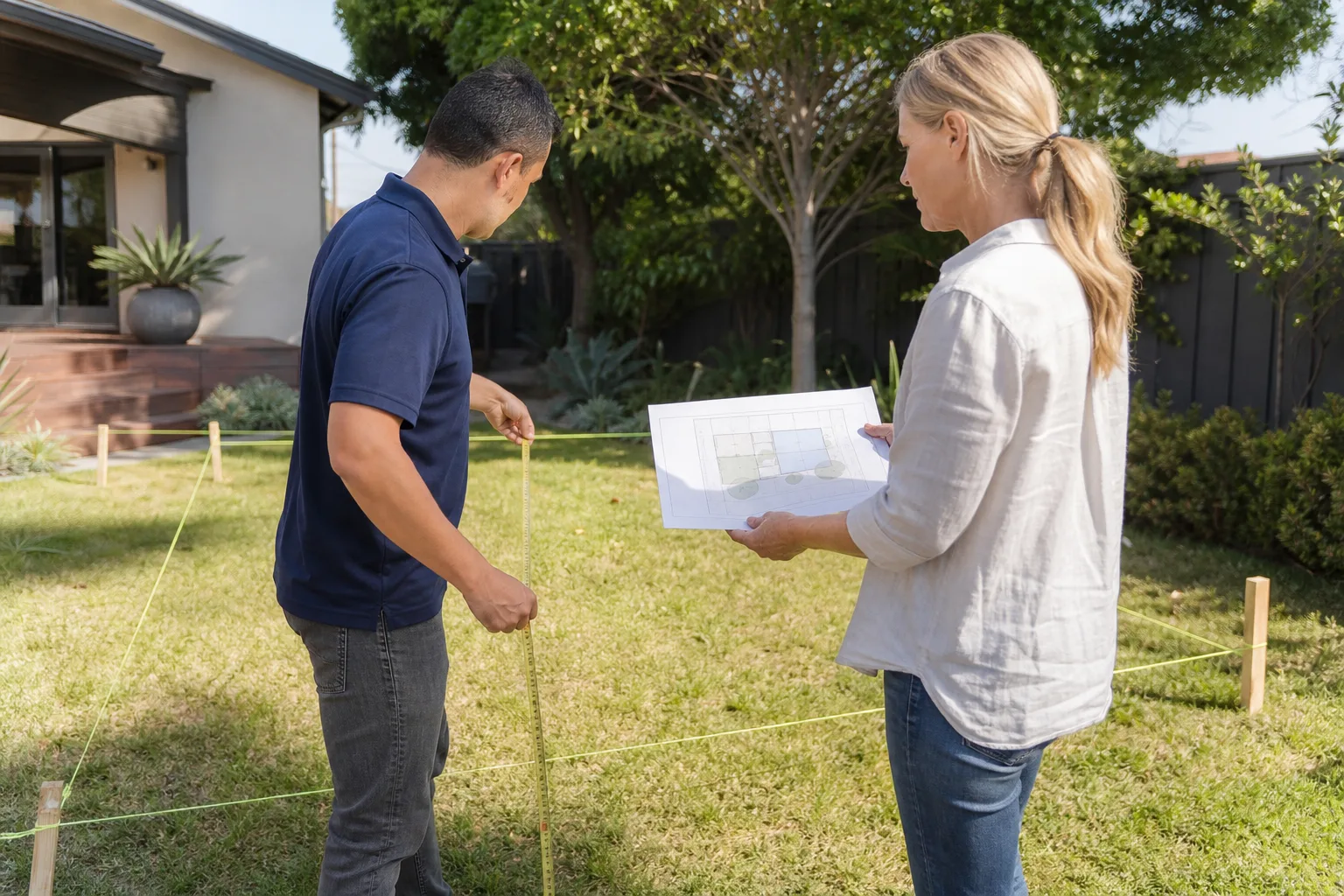
The hybrid model isn’t complicated, but it requires a contractor who’s willing to hand off finish work cleanly. That’s not every contractor. Some general contractors won’t touch a project where the homeowner finishes it, because they’re on the hook for the permit and final inspection. Others are fine with it if the handoff point is defined precisely. Here’s how to structure it so both parties are protected.
- Agree on the handoff point before you sign. The cleanest handoff in Ventura is after final drywall inspection, before finish paint. At that point, all the risky, inspected work is done. Everything left is cosmetic and low-risk.
- Put the handoff in writing in the contract. Define exactly which scopes the contractor completes and which the owner completes. List them. Do not leave it to a verbal understanding.
- Define who owns the permit through final. Usually the contractor holds the permit and calls the final inspection after you finish your scopes. Make sure that’s explicit. If you hold the permit as owner-builder and the contractor does the structural work, you’re both in a legally murky position.
- Set material responsibility. Who buys the tile? Who buys the cabinets? If the contractor purchases them, they’re typically marking up 15% to 20%. If you purchase them, you own any damage or backorder problems. Decide this early.
- Define the warranty boundary. The contractor’s workmanship warranty should cover their scopes. Your DIY scopes are your own warranty. Put this in writing so there’s no dispute later about whose failure a crack in the grout is.
- Agree on the schedule. If you’re doing finish work yourself, the contractor should know the project will extend past their completion date and plan their crew and cash flow accordingly.
We’ve worked on hybrid ADU projects in Ventura where the homeowner took over after final drywall and the job went smoothly. The common thread in every successful one was a written contract that spelled all of the above out. The failed ones started with a handshake and a vague “yeah, you can do the paint.”
If you’re considering a garage conversion instead of a detached unit, the math and the handoff points change. Our Garage Conversion Contractor in Ventura guide covers that path specifically.
Ventura-Specific Code and Permit Considerations
Ventura isn’t just any California coastal city when it comes to ADU construction. The city has its own local amendments and conditions that affect both DIY and professional work. If you’re planning any ADU in Ventura, these are the factors that will show up in your permit and your inspections.
Coastal Climate and Construction Standards
Ventura’s marine layer means morning moisture and salt air. That’s not a small detail. Exterior materials need salt-corrosion resistance, which is why fiber cement siding like James Hardie is common on Ventura ADUs. The coastal wind exposure along the 101 corridor also affects shear wall and framing requirements. A plan set drawn for inland California may not pass Ventura’s structural review without modification. If you’re buying a prefab unit from a company like Tuff Shed or Abodu, the manufacturer typically handles the structural engineering for Ventura’s coastal zone, which removes a lot of the DIY risk from the equation.
Ventura Municipal Code ADU Provisions
Ventura’s ADU ordinance allows detached ADUs up to 1,000 square feet or 50% of the primary dwelling’s living area, whichever is less, on most residential lots. Junior ADUs, or JADUs, an ADU created entirely from existing space within the walls of the primary home, are capped at 500 square feet. The city also requires that at least one parking space per ADU be provided unless the ADU is within a half-mile of a public transit stop or is located in a historic district. Some Ventura neighborhoods near downtown meet the transit exemption, which can save you thousands in driveway and site work.
Permit Timeline Reality
Plan check for a new ADU in Ventura typically runs 4 to 8 weeks for a standard project, longer if the property is in a coastal zone or historic district that triggers additional review. Owner-builder permits don’t move faster. If anything, they sometimes get more scrutiny because the city knows the applicant isn’t a licensed professional. Budget at least 2 to 3 months from plan submittal to permit issuance, and add another 6 to 9 months for construction on a typical detached ADU with standard finishes.
Soil and Foundation Considerations
Ventura sits on everything from sandy coastal soil near the beach to heavier clay in the hills near Telephone Road and east toward Saticoy. Foundation requirements vary significantly by soil type, and the city’s geotechnical requirements can add $5,000 to $15,000 to a project if a soils report is required. This is not a DIY decision. The foundation is the most expensive mistake you can make on an ADU, and it’s the least forgiving of error.
If your ADU plans involve adding to or modifying your existing home at the same time, our Home Addition Contractor in Ventura page covers how to bundle those scopes efficiently.
What to Put in the Contract for a Hybrid ADU Build
If you go the hybrid route, the contract between you and your general contractor is the single most important document in the project. Here’s what it needs to contain to protect both parties and keep the project moving.
A Written Price Before Work Begins
The Kingswell Guarantee standard, which we operate under at Lodgewick ADU Ventura, is a written price before any work starts. No change orders at the door, no “we found something in the wall that’ll cost extra.” The contract should state the total project cost for the contractor’s scopes, the payment schedule tied to milestones, and what happens if something unexpected comes up. Expect to see an allowance for unknowns, usually 5% to 10% of the contractor’s scope, and insist that any use of that allowance be documented in writing.
A Defined Arrival Window
The contract should specify when crews arrive and how many working days the contractor’s scope will take. Vague language like “we’ll be done when we’re done” is a red flag. A professional contractor can give you a week-level schedule and hit it within a reasonable margin.
A Clean Job Site Commitment
This is the part most contracts skip. State that the contractor will leave the job site broom-clean at the end of each workday, that construction debris will be hauled off and not left for the homeowner, and that materials will be stored neatly in a designated area. A clean site isn’t just courtesy. It’s a safety issue when you’re doing finish work around the contractor’s materials.
A Written Guarantee
The guarantee should be in writing, not verbal. At Lodgewick, the 365-Day Done Right Promise says that if the work isn’t right, we come back and make it right, with no charge to the homeowner. Whatever contractor you use, get that commitment in writing and make sure it specifies what’s covered, for how long, and how to invoke it. A contractor who won’t put a guarantee in writing is telling you something you should listen to.
The Handoff Language
As covered above, the handoff point and the scopes on each side should be listed in the contract. Use a table if it helps. Clarity here is cheaper than mediation later.
Common Mistakes to Avoid
- Pulling an owner-builder permit without reading the liability clause. The five-year personal liability exposure on resale catches most people off guard. If there’s any chance you’ll sell within five years, a licensed contractor’s liability insurance is worth the cost.
- DIYing the electrical because “it’s just running wire.” Rough electrical is the most commonly failed inspection on owner-builder ADUs in Ventura. The arc-fault and ground-fault code requirements under current California Electrical Code trip up even experienced homeowners.
- Starting finish work before the final drywall inspection is signed off. Drywall must be nailed and inspected before tape and texture. If you paint a wall that hasn’t been inspected, the inspector can require you to remove drywall to check the nailing pattern. That’s a $2,000 mistake for $50 in paint.
- Assuming a failed inspection is no big deal. It is a big deal, because every downstream trade stops, your schedule slips, and your carrying costs keep running. Treat inspections as pass-or-pay events.
- Buying cheap materials to save money on a rental unit. In Ventura coastal conditions, cheap laminate and vinyl degrade fast in the salt air. You’ll redo the work in three years. Spend the money where it matters: flooring, exterior siding, and roofing.
- Hiring an unlicensed “handyman” for scopes that need a licensed trade. The immediate savings disappears when the work fails inspection, or when the unlicensed worker gets hurt and your insurance denies the claim. Always verify a contractor’s license on the California State License Board website before signing.
- Not accounting for lost rental income during DIY delays. Every month you spend doing finish work yourself is a month the ADU isn’t producing rent. At Ventura market rates, that’s $2,000 to $2,500 a month you’re giving up. Factor that into your DIY savings math honestly.
When to Call a Professional
Call a professional if your ADU involves any structural work, any electrical or plumbing that will be inspected, any foundation work, or any condition where a failed inspection would force you to tear out finished work. Those scopes are not where DIY savings happen. They are where DIY projects go to die. If you’re planning a detached ADU, a garage conversion, or a home addition in Ventura, the smart move is at least getting a written price from a licensed contractor before you decide how much to take on yourself. Check our Home Addition Contractor Maintenance Checklist for Ventura Homeowners for related guidance. Lodgewick ADU Ventura offers free estimates in Ventura. Call (831) 230-7250 and we’ll walk your property, talk through your scope, and put a written price in your hands. No pressure, no obligation, and no change orders at the door. That’s the way it should work.
Frequently Asked Questions
Yes, California law allows owner-builders to pull permits and build an ADU on their own property, but you take on personal liability for construction defects if you sell within five years, and certain trades like electrical, plumbing, and HVAC still require licensed contractors. Most Ventura homeowners are better served by a hybrid approach where they handle finish work and hire pros for the risky scopes. Call (831) 230-7250 for help thinking through your specific situation.
A realistic DIY savings range is $16,000 to $30,000 on finish work like paint, tile, cabinets, and landscaping, assuming you have the skills and 26 to 40 full days of time. That savings doesn’t come from the rough work – electrical, plumbing, framing – which is where failures are expensive and inspections are strict.
A failed inspection stops all downstream work, requires corrections, and triggers a re-inspection that can take 3 to 10 business days in Ventura. Each failure adds to your holding costs and can chew through your DIY savings quickly. If the same scope fails repeatedly, the city may require a licensed contractor to correct it. For an exact quote on having your work done right the first time, call (831) 230-7250.
You can hire licensed subcontractors directly for any trade, including electrical, plumbing, HVAC, and framing. The key is that you’re managing them, scheduling them, and coordinating inspections yourself. That’s a real job, and it’s where most owner-builders burn out or make expensive scheduling mistakes.
Yes, Ventura permits garage conversions as ADUs, and the city has a streamlined process for conversions that don’t change the building footprint. The structural work still requires permits and inspections, and you’ll need to address parking replacement requirements unless your property qualifies for a transit or historic district exemption. For more detail, see our Garage Conversion Contractor in Ventura page.
Prefab units from companies like Abodu, Cover, or Tuff Shed handle the structural engineering and factory build, which removes a lot of the inspection risk from the project. Site work, foundation, and utility connections still require licensed contractors in Ventura, and those scopes are not DIY-friendly. If you’re weighing prefab against custom built, call (831) 230-7250 and we’ll talk through the trade-offs for your specific lot.
The Bottom Line
The DIY versus professional ADU question in Ventura doesn’t have a one-size answer. The right move for most homeowners is a hybrid: hire licensed pros for the structural, electrical, plumbing, and HVAC work that carries inspection risk and safety stakes, and take on the finish work where the savings are real and the mistakes are cheap. The exact line depends on your skill level, your schedule, your risk tolerance, and whether you might sell within five years. Whatever you decide, get every commitment in writing before work starts, and don’t accept a vague handshake where a written guarantee should be. Browse our more guides & resources for additional ADU planning help. That’s what separates ADUs that make money from ADUs that make headaches.
Written by Russ Delmar, Owner at Lodgewick ADU Ventura, serving Ventura since 2010.