Last updated October 15, 2026
Seasonal ADU Care for Ventura: Year-Round Homeowner’s Guide
Ventura averages only about 15 inches of rain per year, but most of it falls inside a ten-week window between January and March. A freshly built accessory dwelling unit (ADU), a separate living space on your property, often has dozens of small penetrations through its exterior shell: vent caps, conduit entries, mini-split line sets, hose bibs. One unsealed penetration can absorb enough moisture in that rainy stretch to produce mold behind drywall by spring. In our work as ADU Builders in Ventura, we’ve walked homeowners through this exact discovery more times than we’d like. This guide lays out a four-quarter care calendar tied to Ventura’s actual weather patterns, not a generic maintenance checklist, so your ADU stays dry, sound, and livable year-round.
Quick Answer
Seasonal ADU care in Ventura means prepping for two distinct stress seasons: the dry Santa Ana wind period from October through December and the marine rain window from January through March. Budget about $300 to $700 per year in routine maintenance, with the heaviest tasks falling in Q1 and Q4; see our ADU Cost Breakdown: The Ventura Homeowner’s Reference for 2026 for a fuller picture. Focus on the building envelope (roof, caulk, weatherstripping) before each stress season, and inspect for moisture, stucco cracks, and termite activity after each one passes.
Table of Contents
- Q4 (October – December): Prepping for Santa Ana Winds and Dry Air
- Q1 (January – March): Managing the Marine Rain Window
- Q2 (April – June): Post-Rain Inspections and Repairs
- Q3 (July – September): Dry-Season Maintenance and Heat Prep
- DIY vs. Professional: What You Can Handle and What You Shouldn’t
- Realistic Seasonal Maintenance Costs in Ventura
- Common Mistakes to Avoid
- When to Call a Professional
- Frequently Asked Questions
Q4 (October – December): Prepping for Santa Ana Winds and Dry Air
October marks the start of Santa Ana season in Ventura County. These offshore winds blow dry, hot air from the inland deserts toward the coast, often gusting 40 to 60 mph through the canyons and foothill neighborhoods east of downtown Ventura. For an ADU, a newer structure still settling into its foundation, those gusts find every loose vent cap, every small gap in exterior caulk, every piece of flashing that isn’t fully sealed.
Here’s the Q4 checklist we recommend for every detached ADU and garage conversion in Ventura:
- Inspect roof penetrations and vent caps. Get eyes on every pipe boot, plumbing vent, exhaust fan cap, and dryer vent. Santa Ana winds can lift a loosened cap and send it into a neighbor’s yard, leaving an open hole for the first January rain. A visual check takes 20 minutes and costs nothing. Expect to pay $8 to $25 per vent cap if you need replacements.
- Swap the HVAC filter. Dry air carries more dust and particulates. A clogged filter forces your mini-split or forced-air unit to work harder, and it pushes that dust through your living space. In Ventura, we recommend swapping filters every 60 to 90 days year-round, but the Q4 swap is the one you cannot skip. Filters run $10 to $40 depending on MERV rating and size.
- Audit exterior caulk around windows and doors. Dry air shrinks caulk. Hairline gaps that were invisible in September become open seams by late October. Run a bead of exterior-grade silicone or polyurethane caulk (about $8 to $14 per tube) along window perimeters, door frames, and the joints where siding meets trim. If you see cracking that runs deeper than the surface bead, that’s a sign the gap widened over summer and you may need backer rod or professional help.
- Clear the area around the ADU. Santa Ana winds turn loose patio furniture, potted plants, and yard debris into projectiles. A plastic chair through a window is a January water intrusion waiting to happen. Store or secure anything within 15 feet of the ADU’s windows and doors before high-wind warnings hit.
- Check the roof edge and drip edge flashing. On newer ADUs, especially prefab installations from manufacturers like Mighty Buildings or Plant Prefab, the roof edge flashing may not have fully seated. Winds lifting the edge of a metal drip edge can start a peel that grows with each gust. Press along the roof edge and look for movement.
The dry-air period is also when exterior wood elements, decks, steps, and trim, lose moisture fastest. Hairline splits that open now will fill with rainwater in January and expand. If you have a Tuff Shed or other wood-framed structure serving as storage or a workspace alongside your ADU, this is the quarter to seal or paint any bare wood surfaces before the rain window opens.
Q1 (January – March): Managing the Marine Rain Window
Ventura’s rain comes in bursts. A single atmospheric river in January can drop 3 to 5 inches in 48 hours, and the city’s older storm drains in neighborhoods like Midtown and Montalvo can back up quickly. Your ADU, especially if it sits on a slab at the bottom of a sloping lot, is the canary in the coal mine for drainage problems.
Most of the water damage we see on ADUs in Ventura happens not during the storm, but in the two weeks after, when trapped moisture works its way through building materials. The Q1 checklist is about moving water away from the structure and catching moisture before it becomes mold.
- Clean gutters and extend downspouts. If your ADU has gutters, clean them before the first storm and check them after every significant rain event. A single clogged downspout dumps hundreds of gallons against one corner of the foundation. Downspout extensions should carry water at least 4 to 6 feet away from the slab edge. Home additions and ADUs in Ventura built on slab-on-grade foundations are especially susceptible to water wicking through the slab edge if downspouts terminate too close to the structure. Extensions cost $10 to $30 each.
- Check subfloor moisture on slab-on-grade ADUs. If your ADU has vinyl plank or laminate flooring directly over a concrete slab, lift a corner of the flooring near exterior doors and check for condensation or darkening on the underside. Slab moisture vapor can rise during prolonged rain periods. You should see clean, dry subfloor. Any discoloration, cupping, or musty smell is an early warning sign. A moisture meter (about $30 to $50 at any hardware store) gives you a concrete reading; anything above 4% moisture content in wood subfloor over concrete warrants professional evaluation.
- Test door and window weatherstripping. Stand inside the ADU during a rain event and run your hand along window sashes and door perimeters. Air movement means water can follow. Replace compressed or cracked weatherstripping immediately. A full door weatherstrip kit runs $15 to $35. It’s the cheapest water-damage prevention you can buy.
- Inspect window wells and stairwells. Detached ADUs often have exterior stair access or basement-level window wells in hillside lots, especially in the Ventura foothills above Foothill Road. Check that drains in these low spots are clear. Standing water against a door threshold will find its way inside within hours.
- Look for efflorescence on stucco or masonry. White, powdery staining on the lower two feet of exterior stucco means water is moving through the wall from inside out or outside in. It’s not fatal on its own, but it tells you where to focus your next caulk and paint pass. Note the spots, photograph them, and revisit in Q2 when everything is dry.
One more Ventura-specific item: salt air from the coast accelerates corrosion on metal components, so during Q1 inspect any exposed metal brackets, vent covers, and door hardware on ADUs west of the 101 freeway. Rust scale that starts during the wet season will spread quickly if you wait until summer to address it.
Q2 (April – June): Post-Rain Inspections and Repairs
By April, Ventura’s rainy season is effectively over and the marine layer begins its morning routine. This is the quarter to assess what the rain left behind and fix it before the dry heat of late summer makes materials brittle and repairs harder.
Stucco inspection is the top priority in Q2. Stucco expands when wet and contracts when dry. Newer ADUs, especially those finished within the last two to three years, are still going through their first full wet-dry cycles. Hairline cracks (under 1/16 inch) in the stucco are normal settlement and can be filled with elastomeric caulk or sealant, about $15 to $25 per tube. Cracks wider than 1/16 inch, especially diagonal cracks radiating from window corners or door frames, are structural red flags. Those should be evaluated by a licensed contractor, not patched over. We’ve seen homeowners in Ventura’s east end neighborhoods seal over diagonal cracks with paint, only to watch them reappear wider the following spring.
Termite bait station check for detached ADUs near landscaping. Detached ADUs typically sit closer to landscaping and irrigation than a main house. Subterranean termites in Ventura County are most active after the soil stays consistently moist, exactly what Q1 delivers. If your ADU has termite bait stations around its perimeter, check them in April. Look for mud tubes inside the station, signs of feeding, or an empty bait cartridge that needs replacing. If you don’t have stations, a simple visual check of the sill plate and any wood-to-ground contact is wise. Wooden steps, trellises, planter boxes, or stored lumber touching the ground near the ADU create termite highways. Keep at least 6 inches of clearance between soil and any wood element. A termite inspection in Ventura typically runs $75 to $150, and bait station installation for a small ADU footprint runs $300 to $600 depending on the number of stations.
Check the roof after the rain. April is the time to look for lifted shingles, shifted tiles, or debris accumulation in roof valleys. Wait for a dry, clear day and inspect from a ladder, or hire a professional for a roof inspection ($150 to $300 in Ventura). Do not walk on the roof yourself, especially on a single-story ADU with a steep pitch. A slip on a damp roof in April costs far more than the inspection fee.
Test the mini-split condensate line. By late spring, your mini-split starts running in cooling mode more often. The condensate drain line can clog with mold, algae, or dust accumulated from winter. A clogged line causes water to back up and drip inside the wall or onto the floor. Pour a cup of white vinegar into the condensate drain access point and watch for free flow. If it backs up, a wet/dry vacuum on the exterior drain line usually clears the clog. This is a $0 maintenance task if you own the vacuum.
Q3 (July – September): Dry-Season Maintenance and Heat Prep
Ventura’s summers are mild by most standards, with highs in the 70s along the coast and low 80s inland, but inland neighborhoods like Saticoy and the eastern side of the city consistently run 5 to 10 degrees hotter than the beachside. A south-facing ADU wall in direct summer sun absorbs heat all afternoon, and anything on that wall, paint, caulk, wood trim, vinyl siding, shows the strain first.
Flush the mini-split condensate drain again. Yes, this was on the Q2 list, but running the system continuously in summer means another flush in late August or early September. Algae growth accelerates in warm, moist environments, and the condensate line is exactly that. This time, use a commercial condensate line cleaner ($15 to $25) instead of vinegar for a more thorough cleaning.
Inspect deck and exterior wood surfaces. Direct sun and low humidity dry wood decking fast. Check for raised grain, splintering, loose fasteners, and any boards that are starting to cup. Sand rough spots and apply a penetrating wood finish or sealer, $30 to $60 per gallon covers roughly 200 to 300 square feet. If the wood is painted rather than stained, look for peeling or chalking on horizontal surfaces, stairs, railings, deck tops, which receive the most UV exposure.
Audit exterior paint on south and west exposure. The south-facing wall of your ADU takes the worst sun. If the paint is fading, chalking, or showing hairline cracking, this is the season to repaint before the Q4 Santa Ana winds hit and blow loose paint off. Spot touch-ups cost $50 to $150 in materials if the damage is limited. A full exterior repaint on a 400-square-foot ADU runs $1,500 to $3,500 in Ventura depending on prep requirements and paint grade.
Check door and window screens. Summer is open-window season in Ventura. Torn or loose screens invite insects and, in wildfire season, embers. Ember intrusion is a real risk in the foothill neighborhoods east of Victoria Avenue. Screens should sit tight in their frames with no gaps at the edges. Replacement screen material costs $10 to $20 per window if you do it yourself; a mobile screen repair service charges $40 to $80 per screen in Ventura.
Clean outdoor condenser coils. The exterior unit of a mini-split or heat pump sits near the ADU, often at grade where dust, leaves, and spider webs accumulate. Gently rinse the coil fins with a garden hose (not a pressure washer, the high-pressure water bends fins and destroys efficiency) once in early July and again in late September if needed. A bent-fin comb costs about $12 and fixes cosmetic fin damage.
This is also the quarter to think about shade. If your ADU has a south or west-facing window wall, exterior shade screens or an awning can cut cooling costs noticeably during July and August, when inland Ventura temps peak. Shade screens run $40 to $120 per window depending on size; a retractable awning runs $800 to $2,500 installed.
DIY vs. Professional: What You Can Handle and What You Shouldn’t
The line between a Saturday morning maintenance task and a licensed-trade job is not always obvious. Here’s the honest division based on what we see on ADUs across Ventura:
DIY-Friendly (no license required, minimal risk)
- HVAC filter replacement: 5 minutes, $10 to $40. No tools needed.
- Gutter cleaning: Ladder, gloves, trowel. Free if you own the ladder. Be cautious on second-story gutters; if the ADU is two stories or the slope is steep, this moves to the professional column.
- Caulk touch-ups around windows and doors: $8 to $14 per tube. A utility knife and a caulk gun are the only tools. Clean the joint first or the caulk won’t bond.
- Weatherstripping replacement: $15 to $35 per door. Match the existing profile; there are at least five common types.
- Mini-split condensate flush: Vinegar or commercial cleaner. 15 minutes.
- Termite bait station visual check: Open the cap, look for activity or an empty cartridge. If you see live termites, close the cap and call a pest professional.
- Smoke and CO detector battery check: Twice a year. Detectors in ADUs are required by California building code; dead batteries are a common ADU inspection failure.
Professional Work (licensed trade required or recommended)
- Roof repairs: Any shingle, tile, flashing, or membrane work. A fall from even an 8-foot roof causes serious injury. Roofers in Ventura charge $75 to $150 per hour or $300 to $800 for typical minor repairs.
- Electrical work: Any outlet, switch, panel, or wiring repair. California requires a licensed electrician (C-10) for residential electrical work on a rental or permitted ADU. Minor fixture swaps under the owner-occupied exemption are sometimes allowed, but when the ADU is tenant-occupied, do not touch electrical. Electricians in Ventura bill $100 to $180 per hour plus materials.
- Plumbing repairs: Anything beyond a toilet flapper or faucet aerator. A leaking supply line behind a wall or under a slab in a slab-on-grade ADU is a job for a licensed plumber (C-36). Plumbers in Ventura charge $120 to $200 per hour with a 1-hour minimum.
- Stucco crack repair wider than 1/16 inch: A patch that fails is worse than no patch. Stucco contractors in Ventura charge $300 to $900 for typical crack repairs including color matching.
- Structural inspections: Diagonal cracks, door frames out of square, floors that bounce or slope. A structural engineer’s report in Ventura runs $500 to $1,500 depending on scope. It’s worth it before you spend money on a repair that doesn’t address the cause.
- Termite treatment: If bait stations show active infestation or you see frass (termite droppings) or shelter tubes. Pest professionals in Ventura charge $800 to $2,500 for localized treatment depending on the extent.
For garage conversions in Ventura, the DIY-vs-pro line shifts further toward professional because many garage conversions retain original structural elements (roof framing, slab, wall framing) that a detached, purpose-built ADU wouldn’t share. If your garage conversion is older than the conversion permit date, treat any structural question as a professional question.
Realistic Seasonal Maintenance Costs in Ventura
Here are the line-item cost ranges we consistently see across Ventura, from beachside neighborhoods to the inland east side, and you’ll find ADU Warning Signs: A Ventura Homeowner’s Reference Guide helpful for spotting trouble early. These are honest market rates, not lowball teaser numbers. You should be able to budget for the full year without a surprise.
- HVAC filters (4 per year): $40 to $160 total, depending on MERV rating and unit size
- Exterior caulk (annual pass): $30 to $80 in materials for a typical 400 to 600 sq ft ADU
- Weatherstripping (doors and windows): $50 to $150 per year
- Gutter cleaning (twice per year): $120 to $300 per cleaning if you hire it out; free if you DIY
- Downspout extensions: $10 to $30 each
- Roof inspection (annual): $150 to $300
- Termite inspection (annual): $75 to $150
- Stucco crack repair (typical, per year): $100 to $900 depending on crack severity
- Mini-split condensate cleaner: $15 to $25 for commercial cleaner, twice yearly
- Exterior wood sealer or deck finish: $30 to $100 per year for a small deck or entry steps
- Full exterior repaint (every 7 to 10 years): $1,500 to $3,500 for a 400 sq ft ADU
Annual budget summary: A diligent homeowner who does the DIY-friendly items and hires out gutters, roof inspection, and termite inspection should budget $500 to $900 per year. If the year includes a stucco repair or deck resurfacing, expect $1,000 to $1,800. The most expensive single item, a full exterior repaint, lands every seven to ten years.
Common Mistakes to Avoid
- Skipping Q4 prep because the weather looks fine. October and November in Ventura are gorgeous, which is exactly why roof caps stay unsecured and caulk stays uncracked. Then the first January atmospheric river hits and the water finds every one of those unfixed gaps. The Q4 pass is the cheapest insurance you’ll buy all year.
- Treating hairline stucco cracks as cosmetic. On a newer ADU, a hairline crack that stays hairline through one full wet season is likely settlement and safe to seal. A crack that grows, branches, or appears at a window corner through more than one season is structural until proven otherwise. Sealing over it hides the evidence without fixing the cause.
- Pointing downspouts at the slab edge. Downspouts that discharge at the base of a slab-on-grade ADU saturate the soil directly against the foundation. Every gallon that goes down that spout in a storm is a gallon pressing against the slab edge. Extensions are $15 and take 10 minutes to install.
- Using a pressure washer on condenser coils, stucco, or siding. Pressure washers force water into gaps, bend coil fins, and strip protective coatings. A garden hose with a gentle spray does the job without the collateral damage.
- Ignoring the salt air if you’re west of the 101. ADUs within a half mile of the coast in Ventura corrode faster. Metal brackets, vent caps, exterior light fixtures, door hinges – all rust faster in the marine zone. If you’re west of the freeway, bump your hardware inspection frequency from annual to twice a year.
- Waiting until a leak appears to find your water shutoff. Every ADU should have a clearly marked water shutoff valve accessible within 30 seconds of discovering a leak. If you don’t know where yours is, find it this weekend and label it. A $10 label saves thousands in water damage when the supply line under a vanity lets go at 10 p.m.
- Neglecting termite stations because “new construction doesn’t have termites.” The ADU is new. The soil around it is not. Subterranean termite colonies in Ventura County don’t know or care when your structure was built; they follow moisture and wood. If the ADU sits near irrigated landscaping, it is a candidate for termite activity regardless of construction date.
When to Call a Professional
Some seasonal maintenance items cross the line from weekend project to licensed-trade work. Call a professional when you see diagonal stucco cracks wider than 1/16 inch, especially at window or door corners. Call a roofer for any visible lifted shingle, exposed nail head, or displaced flashing. Call an electrician if you smell burning plastic near an outlet or breaker, see scorch marks, or have a breaker that trips repeatedly. Call a plumber for any leak inside a wall, under a slab, or at a supply line you can’t isolate. Call a structural engineer if doors that used to close smoothly now stick or drag. And call a termite professional if you find live termites, shelter tubes, or frass anywhere near the ADU.
Lodgewick ADU Ventura offers free estimates in Ventura, call (831) 230-7250 if you suspect structural movement, need a seasonal inspection, or want a professional walkthrough of your ADU before the next stress season hits.
Frequently Asked Questions
Twice a year at minimum: once in October or November before Santa Ana season, and once in March or April after the rainy season ends. A twice-yearly cadence catches seasonal damage before it compounds into structural problems. If your ADU sits west of the 101 within a half mile of the coast, add a third check in mid-summer for salt corrosion on metal components.
Expect to budget $500 to $900 per year for a well-maintained ADU, covering filters, caulk, weatherstripping, gutter cleaning, roof inspection, and termite inspection if you do the simple DIY work yourself. Years that include stucco repairs, deck resurfacing, or exterior repainting push the total to $1,000 to $1,800. Call (831) 230-7250 if you’d like a professional walkthrough with a written estimate.
Prefab ADUs from manufacturers like Mighty Buildings, Boxabl, or Plant Prefab are built in controlled factory conditions, which reduces construction-moisture issues, but the building envelope still meets the same Ventura weather. Roof penetrations, exterior caulk, weatherstripping, and termite exposure are identical concerns regardless of construction method. The maintenance calendar in this guide applies equally to both.
Water intrusion through unsealed roof penetrations and exterior cracks is the leading issue we see, especially after January and February rain events. A close second is slab moisture wicking into flooring on slab-on-grade ADUs where downspouts discharge too close to the foundation. Both are preventable with the Q1 and Q4 checklists in this guide.
You can do a useful visual check: look for mud tubes on the foundation walls, frass (small wood-colored pellets) near baseboards or sill plates, and any wood that sounds hollow when tapped. But professional termite inspections in Ventura run $75 to $150 and include tools and training a DIY check doesn’t. Given the cost of termite damage, the professional inspection is worth the fee annually if your ADU sits near landscaping or irrigation.
No permit is required for routine maintenance like filter replacement, caulking, weatherstripping, gutter cleaning, painting, or sealant application. Permits are required for structural repairs, electrical work, plumbing changes, or any alteration to the ADU’s exterior footprint. When in doubt, check with the City of Ventura’s building department before starting work, or review our ADU Permits, Codes & Inspections in CA: What You Need to Know. A licensed contractor can confirm permit requirements for you during a free estimate.
The Bottom Line
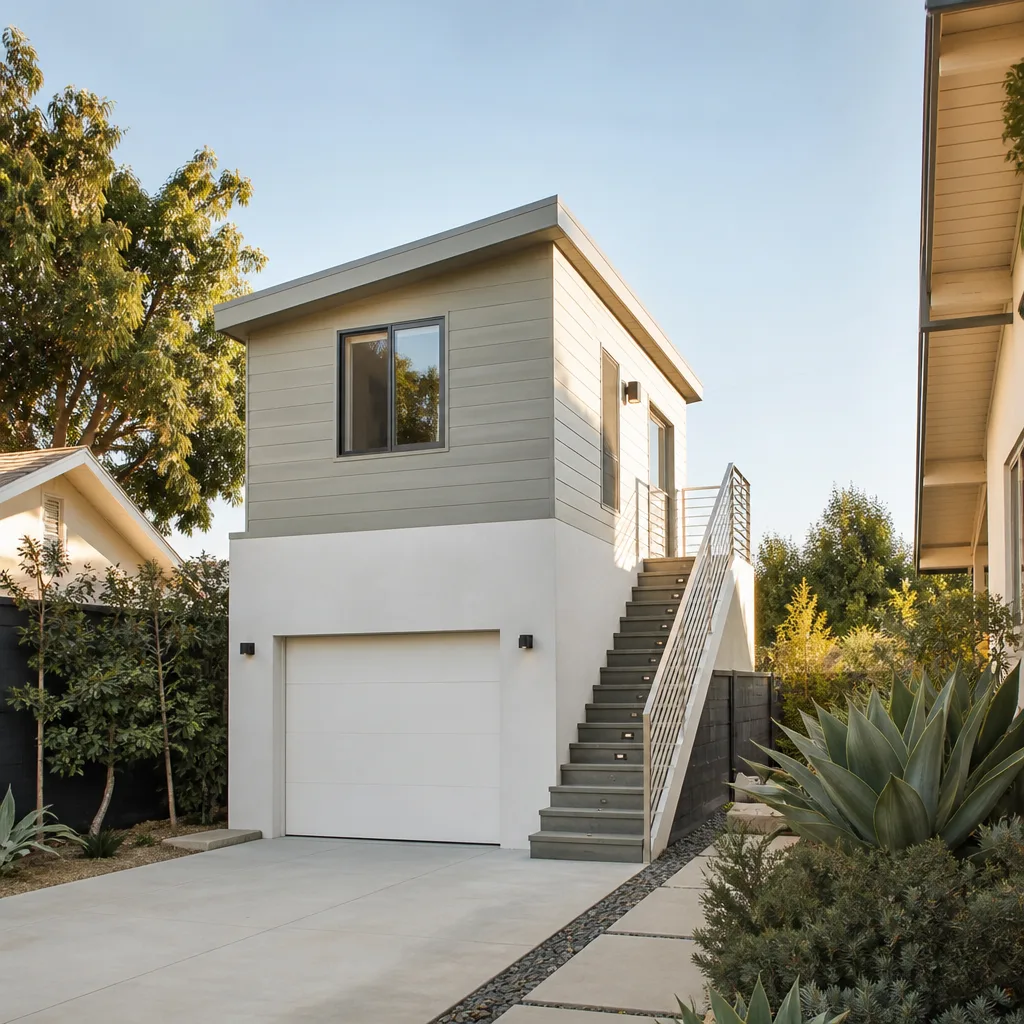
Ventura’s climate is gentle compared to most of California, but it concentrates stress into two narrow windows: the dry wind season from October through December and the rain season from January through March. An ADU, especially one still settling through its first few years, needs a seasonal care routine keyed to those windows. Prep the envelope before each stress season, inspect for damage after each one passes, and handle the small repairs before they become structural problems. Budget $500 to $900 per year, do the DIY items this guide lists, and call a professional for anything involving roofs, electrical, plumbing, structural cracks, or active termites. A well-maintained ADU in Ventura should live as long as the main house; the difference is whether you caught each season’s damage early or let it compound. For a free professional assessment, call Lodgewick ADU Ventura at (831) 230-7250. You can also learn more about our service area at the Lodgewick ADU Ventura home page.
Written by Russ Delmar, Owner at Lodgewick ADU Ventura, serving Ventura since 2010. Browse more guides & resources on ADU planning and care.