Last updated October 15, 2026
The Complete Guide to ADU in Ventura
Most ADU guides are written for California in the abstract. They tell you the state allows accessory dwelling units, toss out a few generic square footage numbers, and call it a day. But Ventura’s Building & Safety division has its own submission checklist, and missing even one item kicks your permit back by 4 to 6 weeks. That’s the frustrating reality we see homeowners hit every month here in Ventura. This guide is different: it maps every Ventura-specific decision you’ll face, from lot configuration to coastal zone rules to the utility connection timeline that surprises almost everyone. For DIY vs Professional ADU: The Ventura Homeowner’s Decision Guide, see our companion post. By the end, you’ll know exactly what to expect, what things cost in our market, and where the real bottlenecks hide.
Quick Answer
Building an ADU in Ventura typically costs $180,000 to $320,000 for a detached unit and $80,000 to $140,000 for a garage conversion, with permit approval taking 4 to 9 months depending on whether your property sits in the coastal zone. The city allows ADUs on most single-family lots, but Ventura’s coastal overlay west of Harbor Boulevard adds review layers that don’t exist elsewhere in the city. Your first step is a pre-application meeting with the Ventura Building & Safety division, not a contractor’s estimate.
Table of Contents
- Ventura-Specific Rules That Generic Guides Miss
- Which ADU Type Fits Your Ventura Lot
- What ADUs Actually Cost in Ventura (2025-2026)
- Utility Connections: The Longest Timeline Item Nobody Warns You About
- The Exact Permit Sequence, Week by Week
- Prefab ADU Brands That Work Well in Ventura
- Financing, Rental Income, and Property Tax Reality
- Common Mistakes to Avoid
- When to Call a Professional
- Frequently Asked Questions
Ventura-Specific Rules That Generic Guides Miss
State law (AB 68, AB 881, SB 897) sets the floor for ADU regulations across California. Cities can’t make ADUs illegal, and they can’t impose parking requirements within a half-mile of transit. But Ventura’s local ordinances, geography, and coastal designation layer on top of that baseline in ways that change your project’s cost and timeline. Here’s what matters here that a Los Angeles or Sacramento guide won’t tell you.
The Coastal Zone Overlay West of Harbor Boulevard
If your property sits west of Harbor Boulevard, you’re almost certainly in Ventura’s coastal zone, which triggers review by the California Coastal Commission in addition to the city’s normal plan check. This adds 6 to 12 weeks to your permit timeline, depending on the project’s scope. It also affects what you can build: certain elevated foundations, setbacks from bluffs or dunes, and stormwater runoff requirements differ from inland properties. We’ve worked with homeowners in the Pierpont and Marina Park areas who were told by other contractors that their ADU would sail through in 8 weeks, only to discover the coastal review doubled that timeline. It didn’t kill the project. It just meant the schedule had to be realistic from day one.
Setback Rules That Differ From State Minimums
State law allows detached ADUs to be set back as little as 4 feet from side and rear property lines. Ventura generally follows that standard, but with two local exceptions worth knowing. First, properties in designated historic districts – including parts of the Downtown and midtown areas – may face tighter setback requirements or design-review conditions. Second, coastal zone properties often carry additional setback requirements tied to sea-level rise adaptation and drainage. If you’re planning an attached ADU or a garage conversion, setback rules rarely apply since the structure already exists. For a new detached unit on a typical 6,000 square foot Ventura lot, expect to work within a 4-foot side setback and a 4-foot rear setback in most inland neighborhoods.
Fire Safety and Wildland Interface Rules
Ventura’s hillside neighborhoods – think Foothill Road, Ondulando, and the areas above Poli Street – sit in the city’s wildland-urban interface zone. Homes in these areas face stricter fire-hardening requirements for any new structure, including ADUs. That can mean Class A fire-rated roofing, ember-resistant vents, and tempered glass windows. The good news: if your primary home was built in the last 15 years, it likely already meets these standards, and your ADU will simply need to match them. If your home is older, plan for a few thousand dollars in fire-safety upgrades baked into the ADU budget. This is a real cost driver that generic guides never mention.
Parking Rules in Practice
State law removed parking requirements for ADUs within a half-mile of public transit. In Ventura, that covers a surprising amount of the city – most of the downtown corridor, the Avenue, and much of midtown. For properties outside that radius, Ventura typically requires one parking space per ADU, but that space can be uncovered and can occupy the same driveway setback already serving the primary home. In practice, most homeowners we work with don’t need to sacrifice yard space for parking.
Which ADU Type Fits Your Ventura Lot
Ventura’s housing stock runs heavily toward single-story ranch homes built between 1940 and 1975 on lots between 5,000 and 8,000 square feet. That specific footprint means certain ADU types work better here than others. Here’s how to think about your options.
Detached ADU: Best for Larger Lots (6,000+ sq ft)
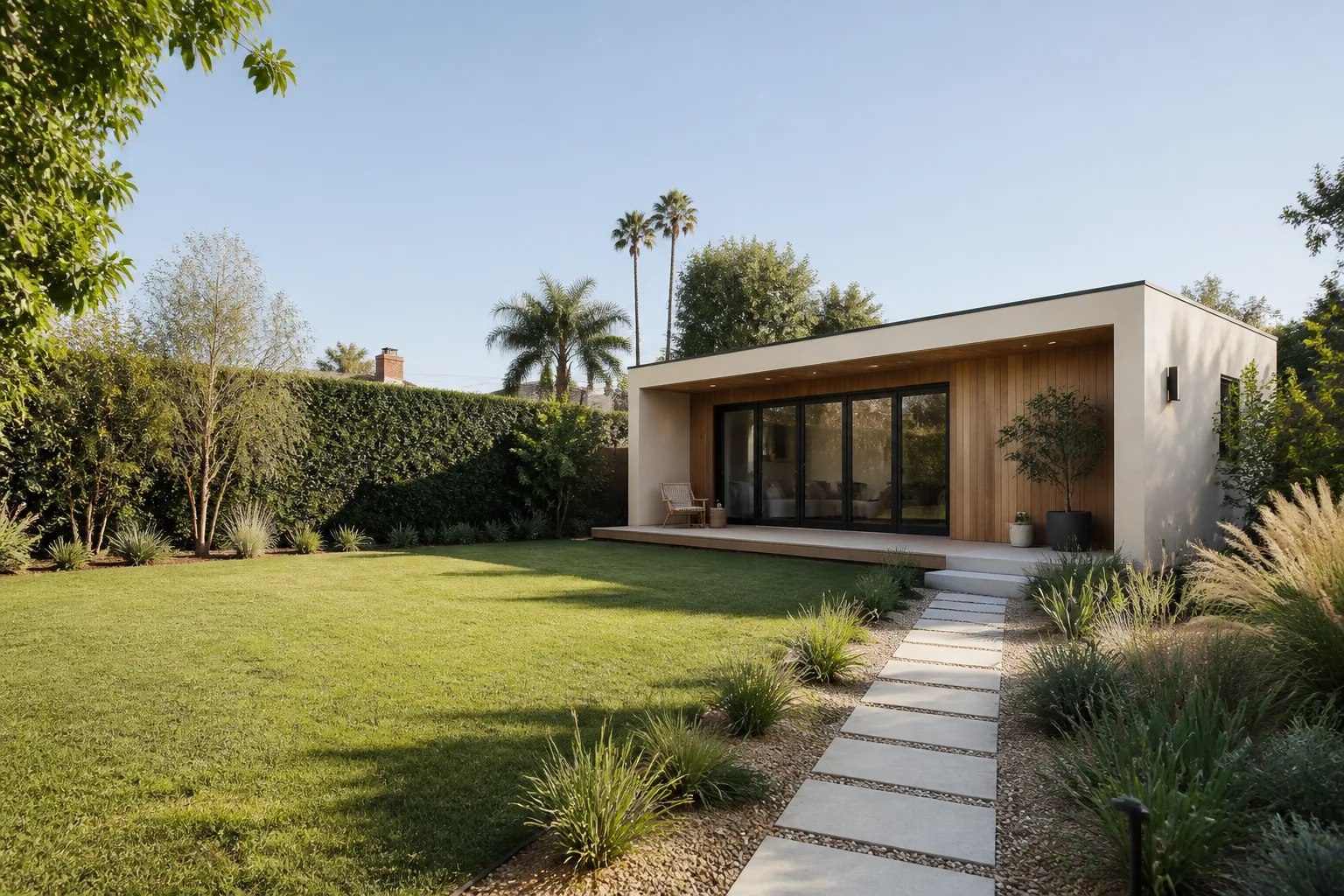
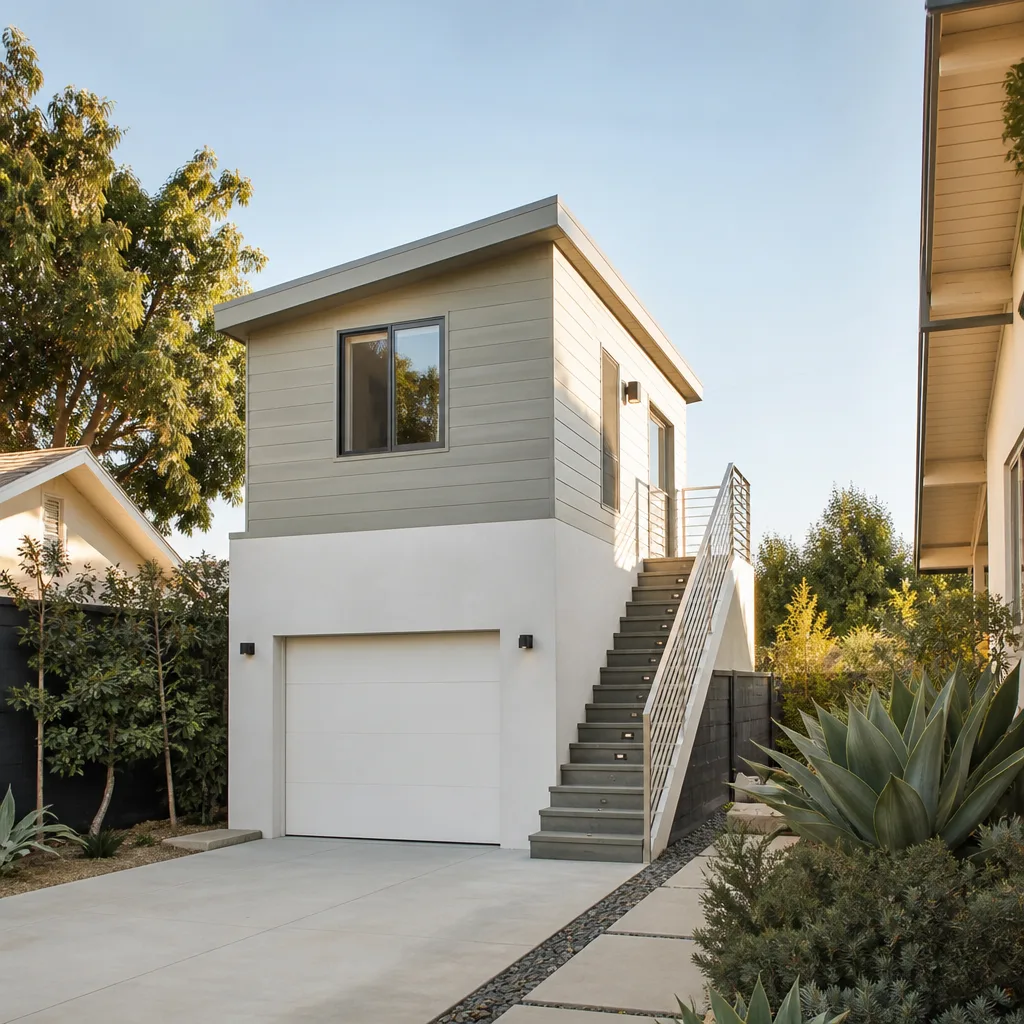
A detached ADU is a standalone structure in your backyard, typically 500 to 1,000 square feet. On a 6,000 square foot Ventura lot with a 1,400 square foot ranch home, you’ll generally have 20 to 30 feet of usable setback area behind the house, which fits a 600 to 800 square foot detached unit comfortably. These units offer the most privacy for both you and your tenant or family member, and they don’t disturb the main home’s roofline. The tradeoff is cost: detached units are the most expensive per square foot because they require new foundation work, separate utility runs, and full exterior walls.
Square footage ranges that work well on standard Ventura lots:
- 500-600 sq ft: One bedroom, one bath. Fits almost any 5,000+ sq ft lot.
- 600-800 sq ft: Two bedrooms or one bedroom plus office. The sweet spot for most 6,000-7,500 sq ft lots.
- 800-1,000 sq ft: Two to three bedrooms. Needs a 7,500+ sq ft lot or a deep lot configuration.
Garage Conversion: Best for Standard Lots and Tight Budgets
A garage conversion turns your existing attached or detached garage into a livable ADU. In Ventura, where many homes have two-car garages ranging from 380 to 440 square feet, this is often the smartest money move. The structure already exists, which means no new foundation, no new exterior walls, and significantly lower per-square-foot costs. The tradeoff: you lose parking and storage space. Some homeowners resolve this by adding a carport or simply accepting on-street parking, which is manageable in most Ventura neighborhoods outside the busiest blocks of downtown.
Garage conversions in Ventura typically yield a 350 to 500 square foot one-bedroom unit. That’s smaller than most detached ADUs, but it’s also livable, rentable, and comfortable for a single person or couple. If you’re in east Ventura or the College area, garage conversions have strong rental demand from students and young professionals.
Attached ADU: Best for Homes With Unused Side Yard Space
An attached ADU adds living space onto the primary home’s existing footprint, typically as a wing or second-story addition. This works well on Ventura lots where the backyard is small but the side yard is wide – a common configuration in the midtown grid. Attached units share at least one wall with the main home, which reduces construction costs compared to a fully detached build. They also share the existing foundation in some cases, though most require a partial new foundation. The main limitation: an attached ADU must match the primary home’s architecture more closely, which can add design and stucco or siding costs. Our Home Addition Contractor in Ventura guide covers this option in more detail for homeowners weighing attached additions against standalone units.
Junior ADU (JADU): Best for Empty Bedrooms and In-Law Suites
A JADU is a small unit created within the existing walls of your primary home – typically a converted bedroom or bonus room with its own entrance, a small kitchenette (no full kitchen required), and sometimes a shared bathroom. JADUs max out at 500 square feet. In Ventura’s older housing stock, where many homes have extra bedrooms or underused dens, a JADU can be the lowest-cost path to adding a rental unit. The tradeoff: a JADU shares the home’s main systems and sometimes the main entrance corridor, so it’s less private than a detached unit. It’s ideal for family members rather than unrelated tenants.
What ADUs Actually Cost in Ventura (2025-2026)
Let’s talk real numbers. Ventura’s construction costs run slightly below Los Angeles but above inland markets like Oxnard or Santa Paula, driven by coastal permit fees and our local labor market. See our Home Addition Contractor Maintenance Checklist for Ventura Homeowners to protect your investment long-term. Here’s what homeowners should expect to pay in 2025 and 2026.
| ADU Type | Typical Size | Cost Range | Cost Per Sq Ft | Timeline |
|---|---|---|---|---|
| Detached ADU | 600-1,000 sq ft | $180,000 – $320,000 | $300 – $380 | 8-14 months |
| Attached ADU | 500-800 sq ft | $140,000 – $240,000 | $280 – $340 | 6-10 months |
| Garage Conversion | 350-500 sq ft | $80,000 – $140,000 | $230 – $300 | 4-8 months |
| JADU | 250-500 sq ft | $50,000 – $90,000 | $180 – $240 | 3-6 months |
What moves your number up or down within those ranges:
- Foundation condition: Older Ventura garages built before 1960 often have slab foundations that don’t meet current seismic codes. Retrofitting can add $15,000 to $30,000.
- Site access: Hillside lots in the Ventura foothills with limited crane or truck access add $10,000 to $20,000 in logistics costs.
- Utility trenching: If your ADU sits far from the main sewer line or electrical panel, trenching and conduit runs can add $8,000 to $25,000.
- Design review: Properties in historic districts or coastal zones with design review conditions can add $5,000 to $15,000 in professional fees and revision cycles.
- Finishes: Basic builder-grade finishes land at the bottom of the range. Mid-tier finishes (quartz counters, LVP flooring, decent bathroom fixtures) add roughly $30 to $50 per square foot.
These numbers include construction, materials, labor, and standard permits. They do not include design fees, surveying (usually $3,000 to $6,000 in Ventura), or utility connection charges from Southern California Gas and SCE, which can range from $2,000 to $15,000 depending on your property’s existing service capacity. For a deeper dive into what our team has seen on Ventura projects, see the ADU Builders in Ventura page.
Utility Connections: The Longest Timeline Item Nobody Warns You About
Here’s the counterintuitive part of ADU building in Ventura: the construction itself is rarely the bottleneck. The utility connection process is. Southern California Gas, Southern California Edison, and the City of Ventura’s water department each have their own application processes, review queues, and inspection requirements. None of them coordinate with each other. If you wait until your building permit is approved to start the utility applications, you’ll add 2 to 4 months to your project’s finish date.
Southern California Gas (SCG)
If your ADU needs a gas line – for a range, water heater, or furnace – SCG must approve a new service connection or an upgrade to your existing meter. Lead times in Ventura currently run 4 to 8 weeks for standard residential connections, longer if your street requires main line work. Many Ventura homeowners avoid gas entirely by building all-electric ADUs, which eliminates the SCG step and can reduce construction costs by $5,000 to $10,000. Ventura’s mild climate makes all-electric heating and cooling realistic year-round.
Southern California Edison (SCE)
Every ADU needs electrical service. If your existing panel can’t handle the added load – common in homes built before 1980 – you’ll need a panel upgrade and possibly a new service drop. SCE’s approval and connection timeline in Ventura runs 3 to 8 weeks. In some midtown and east Ventura neighborhoods with older overhead lines, SCE may require line upgrades that add cost and time. Start this application during design, not after permit approval.
City of Ventura Water and Sewer
Water and sewer connections run through the city’s Public Works department, not Building & Safety. Sewer lateral connections require a separate permit and a city inspection. If your ADU sits more than 150 feet from the main sewer line, you may need a pump or a separate connection point, which adds $4,000 to $12,000. The city’s water meter upgrade process typically takes 2 to 4 weeks. Again: apply early, during design or right at permit submittal, to avoid standing around waiting for a meter.
The Exact Permit Sequence, Week by Week
Ventura’s Building & Safety division has streamlined its ADU review process in recent years, but the sequence still has distinct stages. Here’s what our team has seen on recent Ventura projects, with honest week counts.
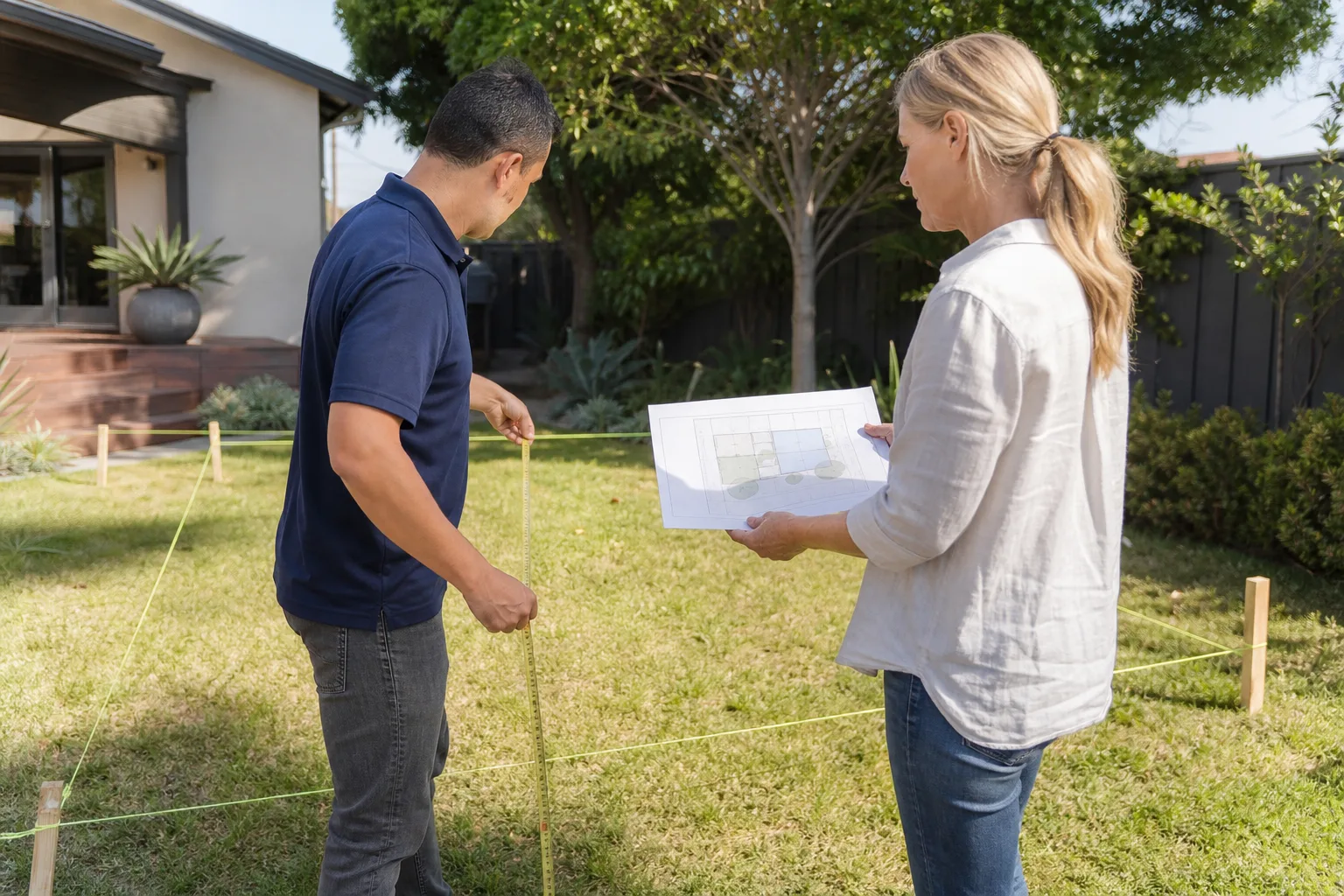
- Pre-application meeting (weeks 1-2): Schedule a meeting with a Ventura planner to review your lot, verify zoning, and flag any coastal zone or historic district requirements. This meeting is free and saves months of rework. Bring your parcel number and a rough idea of what you want.
- Design and engineering (weeks 2-10): Your architect or designer produces construction drawings, and a structural engineer stamps them. For garage conversions and JADUs, this stage runs shorter. For detached units, expect 6 to 8 weeks minimum.
- Permit submittal (week 10): Submit your drawings, site plan, energy calculations (Title 24), and utility applications to Building & Safety. Missing items here trigger the 4-6 week kickback delay this guide opened with. A complete submittal is the single biggest timeline lever you control.
- Plan check (weeks 10-18): City plan check typically runs 4 to 8 weeks in Ventura for standard ADUs. Coastal zone projects add a parallel review track of 6 to 12 weeks. Respond to plan-check comments quickly to keep this stage moving.
- Permit issuance and utility connections (weeks 18-26): Once your permit is issued, pull the utility meters and schedule connection work. If you applied for utilities during design, this stage shrinks dramatically.
- Construction (weeks 26-52 for detached, weeks 26-42 for garage conversions): A 600 square foot detached ADU takes 4 to 6 months of active construction in Ventura. Garage conversions run 3 to 4 months. Weather delays are minimal in Ventura’s climate, which is a genuine advantage over coastal cities further north.
- Final inspection and certificate of occupancy (weeks 52-56): Ventura’s inspectors are thorough but fair. Expect one to two rounds of minor corrections before the final sign-off.
Total realistic timeline from pre-application to move-in: 10 to 14 months for a detached ADU, 7 to 10 months for a garage conversion, and 5 to 8 months for a JADU. Anyone promising 6 months door-to-door for a detached build in Ventura is setting you up for disappointment.
Prefab ADU Brands That Work Well in Ventura
Prefab ADUs – units built in a factory and assembled on your lot – have gained serious traction in California, and several brands work especially well for Ventura’s lot configurations and climate. Prefab can cut on-site construction time from months to weeks, though the permit process remains the same. Here are four brands we’ve worked with on Ventura projects.
Abodu builds compact, efficient detached units starting around 500 square feet. Their designs fit well on Ventura’s standard 6,000 square foot lots, and their streamlined installation process works with local contractors who handle site prep and utility hookups. Cover produces customizable prefab units with a more architectural feel, ideal for homeowners who want a unit that doesn’t look like a backyard shed. Dvele focuses on high-performance, all-electric homes with excellent insulation and air sealing – a smart fit for Ventura’s coastal fog and occasional heat waves. Mighty Buildings uses 3D-printed composite panels, which makes their units lighter and faster to assemble than traditional prefab.
The honest tradeoff: prefab is not always cheaper than stick-built in Ventura. Where prefab saves money is time – less on-site labor means fewer weeks of construction. Where it costs more is shipping and crane placement, especially on hillside lots or properties with tight alley access. For most Ventura homeowners, prefab is worth considering for detached units under 800 square feet. For garage conversions and attached ADUs, traditional stick-built construction usually remains the better value. Our Garage Conversion Contractor in Ventura page walks through the conversion process in detail.
Financing, Rental Income, and Property Tax Reality
Most Ventura homeowners finance their ADU through one of three routes: a home equity line of credit (HELOC), a cash-out refinance, or a construction loan that converts to a mortgage. California also offers the CalHFA ADU Grant Program, which provides up to $40,000 toward pre-construction costs like design, permits, and site prep for qualifying homeowners. Ventura County participates in this program, and it’s worth checking your eligibility before you spend a dollar on drawings.
On the rental side, Ventura’s market supports strong ADU rents. A one-bedroom ADU in midtown, east Ventura, or near the College area typically rents for $1,800 to $2,400 per month. A two-bedroom detached unit in a desirable neighborhood like the hillsides above downtown can command $2,600 to $3,200. Those numbers mean most ADUs in Ventura cash-flow positively against their construction cost within 5 to 8 years, depending on financing terms.
Property taxes rise when you add an ADU, but not by as much as most people fear. Ventura County reassesses your property based on the ADU’s construction value, not the total new market value of your home. A $200,000 detached ADU typically adds roughly $2,000 to $2,500 per year to your property tax bill. Compared to buying a separate rental property in Ventura’s market, that’s a minimal added burden for a significant income stream.
Common Mistakes to Avoid
- Buying an ADU kit before checking Ventura’s coastal zone map. West-of-Harbor properties face review conditions that some prefab designs can’t meet without modification. Check your zone first, then choose your unit.
- Starting utility applications after the building permit is approved. This single mistake adds 2 to 4 months to almost every project we see it on. Apply during design.
- Assuming Ventura’s setback rules match the state minimums exactly. Most inland lots do match, but historic district properties and coastal zone lots carry additional conditions that change your footprint options.
- Budgeting for construction but not for Ventura’s design and permit fees. Design, engineering, surveying, city fees, and utility connection charges typically add $25,000 to $50,000 on top of the construction cost.
- Underestimating the garage foundation condition. Pre-1960 Ventura garages often need slab reinforcement for seismic code compliance, a cost no YouTube video mentions.
- Hiring a contractor who gives you a verbal estimate and a handshake. In Ventura, a complete permit submittal is your timeline’s best friend, and a written line-item price is your budget’s. If a contractor won’t write it down, keep looking.
- Ignoring the JADU option entirely. If you have an underused bedroom with an exterior wall, a JADU is the fastest, cheapest, and lowest-risk path to rental income in Ventura – and many homeowners never learn it exists.
When to Call a Professional
You can handle the pre-application meeting and initial zoning research on your own, and you should – the more you understand before hiring anyone, the better your project will go. But there are points where professional help pays for itself. If your property sits west of Harbor Boulevard, hire a designer or contractor with coastal zone experience before you spend money on plans. If your garage dates from before 1960, have a structural engineer evaluate the foundation before you assume a conversion is straightforward. If your electrical panel is original to a home built before 1980, budget for a service upgrade early rather than as a surprise later. And if you’ve been quoted a number that seems too good to be true, get it in writing with line items before you sign anything. For help vetting builders, read How to Hire a ADU Contractor in Ventura: A Step-by-Step Guide. Lodgewick ADU Ventura offers free estimates in Ventura – call (831) 230-7250 and we’ll walk your lot with you and give you a written price before any work starts.
Frequently Asked Questions
A detached ADU in Ventura costs $180,000 to $320,000 all-in, while a garage conversion runs $80,000 to $140,000. Your final number depends on lot conditions, finishes, utility upgrades, and whether your property sits in the coastal zone. Call (831) 230-7250 for a written line-item estimate specific to your lot – estimates are free.
Plan check for a standard inland ADU in Ventura typically takes 4 to 8 weeks, but coastal zone properties add 6 to 12 weeks on a parallel review track. Total timeline from pre-application to certificate of occupancy runs 10 to 14 months for a detached unit and 7 to 10 months for a garage conversion.
Yes. State law allows ADUs on lots as small as 2,500 square feet in most cases. On a 5,000 square foot Ventura lot, you’ll likely be limited to a 500 to 600 square foot detached unit or a garage conversion, depending on your primary home’s footprint and existing setbacks.
Water and sewer can often connect through your existing service line, but your electrical service will likely need either a panel upgrade or a separate meter depending on ADU size and your home’s current capacity. Gas connections through Southern California Gas require a separate application if you choose gas appliances. An all-electric ADU avoids the gas step entirely.
An ADU is a separate dwelling unit with its own full kitchen, bathroom, and entrance – it can be detached, attached, or a garage conversion. A JADU is a smaller unit (500 square feet maximum) created inside your existing home, often from a bedroom conversion, with a kitchenette and sometimes a shared bathroom. JADUs cost significantly less and permit faster.
No, not for most properties. State law exempts ADUs within a half-mile of public transit from parking requirements, and that covers a large portion of Ventura. For properties outside that radius, one uncovered parking space is typically required, but it can use your existing driveway setback.
The Bottom Line
Building an ADU in Ventura is one of the smartest financial moves a local homeowner can make in 2025 and 2026 – but only if you enter the process with realistic timelines, accurate cost expectations, and a contractor who puts everything in writing. The city’s permit process rewards completeness, the utility companies reward early applications, and your budget rewards honest numbers from day one. Whether you’re planning a detached unit for rental income, a garage conversion for aging parents, or a JADU for extra space, the path is clear: verify your zone, design for your lot, apply for utilities early, and work with a builder who gives you a written price and a written guarantee before the first nail is driven. Explore our more guides & resources for every stage of your project.
Written by Russ Delmar, Owner at Lodgewick ADU Ventura, serving Ventura since 2010.
For a deeper look at how our team handles ADU construction from permit to final inspection, start with the Lodgewick ADU Ventura home page.