Last updated October 15, 2026
ADU Warning Signs: A Ventura Homeowner’s Reference Guide
A door that starts sticking six months after your ADU is finished isn’t a minor annoyance. It’s often the first readable sign of foundation settling or a framing issue, and catching it early is the difference between a $400 fix and a $14,000 one. This guide names the warning signs that show up in Ventura ADUs, garage conversions, and backyard units, explains what each one actually means, and tells you when to act-complementing The Complete Guide to ADU in Ventura with a focus on early detection. You’ll learn how to read cracks, smells, breaker trips, and drain behavior like a contractor would.
Quick Answer
ADU warning signs in Ventura fall into five categories: structural movement (sticking doors, recurring drywall cracks at corners, stair-step cracks in stucco), moisture intrusion (efflorescence on slabs, mold at window corners, musty smells), electrical faults (tripping breakers, warm or discolored outlets, flickering under load), plumbing problems (slow drains in new units, water hammer, warm spots on slab floors), and foundation settlement that shows up in the first 18 months after construction. Any one sign is worth documenting and reporting to your builder in writing. Two or more signs together usually mean you need a professional inspection within 30 days, as outlined in our Home Addition Contractor Maintenance Checklist for Ventura Homeowners.
Table of Contents
- Structural Red Flags: Cracks That Mean Something
- Moisture Warning Signs Specific to Ventura’s Climate
- Electrical Warning Signs You Should Never Ignore
- Plumbing Early Warnings in ADUs
- Foundation Settlement: The First 18 Months
- How to Document and Report a Warning Sign
- Common Mistakes to Avoid
- When to Call a Professional
- Frequently Asked Questions
Structural Red Flags: Cracks That Mean Something
Not every crack is a problem. In fact, most ADUs in Ventura develop small shrinkage cracks in the first year as lumber dries and concrete cures. The skill is telling the difference between a cosmetic crack and a structural one, and it comes down to width, location, and pattern.
Hairline cracks under 1/16 inch wide that run vertically or diagonally on drywall and don’t grow over time are almost always cure shrinkage. They’re common at drywall seams, above doorways, and at the junction between walls and ceilings. You can patch them and move on. What you can’t ignore are cracks that are wider than 1/8 inch, cracks that return after being patched, or cracks that form a stair-step pattern through stucco or concrete block.
A stair-step crack in stucco or block follows the mortar joints in a diagonal line that steps down like a staircase. That pattern is the classic fingerprint of differential settlement: one corner of the ADU is sinking faster than the rest. In Ventura, we see this most often on ADUs built over clay soils in the east end of town, where soil expands and contracts more dramatically with rain and drought cycles than in the sandy soils closer to the coast.
Here’s what to look for, described the way we teach our clients to photograph it:
- Drywall corner cracks: Cracks that start at the corner of a window or door and angle outward at roughly 45 degrees. These often indicate the header above the opening is deflecting under load, meaning the framing wasn’t sized correctly or has loosened.
- Straight vertical cracks at wall-ceiling joints: If the crack runs perfectly along the seam where the wall meets the ceiling on an interior wall, it’s usually truss uplift. Roof trusses lift slightly off interior partitions during temperature swings, and while it’s not dangerous, it will keep coming back until the connection is corrected.
- Horizontal cracks in foundation walls: A horizontal crack anywhere in a stem wall or retaining wall is the most serious crack you’ll find. It means lateral pressure from soil is pushing the wall inward. This needs a structural engineer, not a patch job.
- Stair-step cracks in stucco: As described above, this signals settlement. Take a photo with a quarter or a ruler next to the crack for scale, write the date on the photo, and take another photo in 30 days to see if it’s growing.
We also tell Ventura homeowners to pay attention to doors that stick seasonally. A door that rubs in winter but swings free in summer is often just humidity. A door that sticks more every month, regardless of weather, is a different story entirely.
Moisture Warning Signs Specific to Ventura’s Climate
Ventura’s coastal climate creates a specific moisture profile that differs from inland Ventura County. Morning marine layer, salt air, and fog that burns off by noon mean ADUs here face condensation cycles that homes in Ojai or Simi Valley don’t. The warning signs below are the ones we see most often in Ventura ADUs, garage conversions, and backyard units within three miles of the coast.
Efflorescence on the slab: Efflorescence looks like a white, chalky or crystalline powder that appears on exposed concrete, often near the base of walls or in garage-conversion floors. It forms when water moves through the concrete, carrying dissolved minerals to the surface, where the water evaporates and leaves the minerals behind. A small amount on a new slab can be normal curing. A spreading patch that returns after being brushed off means water is wicking up through the slab from below. In Ventura, where the water table is high in many neighborhoods near the Santa Clara River and the harbor, a slab without a proper vapor barrier will pull moisture forever. The fix is rarely simple: it can mean cutting and installing a moisture barrier, installing a sump, or addressing exterior drainage first.
Mold at window corners: Early mold in an ADU shows up where condensation collects: the bottom corners of windows, behind curtains, and on the underside of window sills. It appears as small black or dark green spots that smear when wiped. In Ventura’s marine-layer mornings, single-pane windows and uninsulated aluminum frames will sweat every day from May through August. The long-term fix is usually better window flashing, proper insulation at the penetration, and sometimes upgrading to double-pane with a thermal break. The short-term fix, cleaning the mold, is fine, but it will return in weeks if the condensation source isn’t addressed.
A musty smell in a new ADU: New construction should smell like paint, drywall dust, and new cabinets. It should not smell musty. A persistent musty odor, especially one that gets stronger after rain, indicates hidden moisture: behind the siding, under the flooring, or inside the wall cavity. By the time you can smell it, the fungal activity likely began months earlier. We’ve opened up walls in relatively new Ventura ADUs and found wet insulation from a flashing error that was letting coastal rain blow in behind the stucco. The homeowner had been living with the smell for a year, and what could have been a $900 flashing repair had become a $9,000 remediation project.
Electrical Warning Signs You Should Never Ignore
Electrical problems in ADUs announce themselves early, but only if you’re paying attention. None of the signs below should ever be dismissed as a quirk of a new unit, because electrical faults are the one category of ADU problem that can turn catastrophic without warning.
Tripping breakers on a new panel: A breaker that trips occasionally under heavy load is doing its job. A breaker that trips repeatedly on a normal load, or trips immediately after being reset, is telling you something specific. In new ADU construction, the most common cause we find is an undersized panel or circuit: a garage conversion that got a 60-amp subpanel when the household actually needs 100 amps, or a kitchen circuit wired at 15 amps when modern appliances pull 20. In Ventura, where many ADUs are built to support aging parents or rental tenants, the load calculation should have anticipated a full kitchen, a washer, air conditioning, and maybe an EV charger-a decision covered in our DIY vs Professional ADU: The Ventura Homeowner’s Decision Guide. If the panel was sized for less, the breakers will keep making that clear.
Discoloration around outlets: Yellowing, browning, or any darkening within an inch of an outlet faceplate is a serious sign. It means heat is building up at the connection point inside the box, usually from a loose wire, a backstabbed connection, or an outlet being asked to carry more amperage than it’s rated for. This is a fire hazard, not a cosmetic issue. If an outlet faceplate is warm to the touch, that’s the same problem at an earlier stage.
Flickering under load: Lights that dim or flicker briefly when a microwave starts, a space heater turns on, or a window AC kicks in suggest a loose neutral connection, an undersized feeder, or a problem at the panel bus. In a new ADU, this often traces back to a rushed final connection or a subpanel that wasn’t torqued to spec. It’s an inexpensive fix if caught early: usually between $200 and $600 to tighten and correct connections, depending on access.
Our guidance to any Ventura ADU owner is this: if you see discoloration, feel warmth, or smell a fishy odor near any outlet or switch, call a licensed electrician that week. A fishy or chemical smell is the odor of overheating insulation and wire jackets. Do not keep using the outlet. Do not wait to see if it happens again.
Plumbing Early Warnings in ADUs
Plumbing failures in ADUs are rarely dramatic at first. They whisper. The reason ADU plumbing is especially vulnerable is that these units are often built at the farthest point from the main sewer line, with long waste runs and elevation changes that leave little margin for error in slope and venting.
Slow drains in a new unit: A drain that’s slow from day one of occupancy is usually not a clog. It’s a slope error: the waste pipe was installed without the required 1/4 inch per foot of fall, so water moves too slowly and solids settle in the pipe. In a garage conversion, where the floor slab already exists and the plumber has to work with the elevation available, slope errors are the single most common plumbing defect we correct in Ventura ADUs. If two or more fixtures drain slowly, that’s a layout or slope problem. If just one drains slowly, it could still be a slope error but might also be a venting issue or an isolated obstruction.
Water hammer sounds: Water hammer is a sharp banging sound when a faucet or washing machine valve closes quickly. It happens because water moving through the pipe has momentum, and when a valve slams shut, that momentum has to go somewhere. In new construction, hammer arrestors should be installed at fast-closing valves like dishwashers and washing machines. If your ADU bangs every time the washer cycles, the arrestors are missing or undersized. Left uncorrected, water hammer can loosen joints, wear out valve seals, and eventually cause a leak inside a wall.
A warm spot on a slab-on-grade floor: Many Ventura ADUs are built slab-on-grade, which means the concrete floor is the floor. If you walk barefoot and find a warm spot on the slab that has no heat source above it, what you’re most likely feeling is a hot-water leak under the slab: the supply line has cracked or separated, and hot water is saturating the soil and heating the concrete above it. This is not a wait-and-see situation. By the time the slab feels warm, water has been leaking for weeks or months, and the repair will involve cutting into the slab to access the line. Early detection, before the warm spot appears, often comes from an unexplained jump in the water bill or the sound of running water when all fixtures are off.
Foundation Settlement: The First 18 Months
The first 18 months after an ADU is built are the highest-risk window for settlement problems in Ventura. That’s because the soil under the new foundation is going through its first full cycle of wet winters and dry summers, and any weakness in the subgrade preparation will express itself during that cycle.
In Ventura specifically, we deal with two very different soil types. Closer to the coast, soils are sandy and well-drained, but they can consolidate unevenly if not compacted correctly before the pour. In the east end of Ventura and up into the foothills, expansive clay soils shrink and swell dramatically with moisture changes, and a foundation poured without accounting for that expansion will move seasonally. A properly prepared foundation includes compacted fill, the right base material, and often rebar sized to resist the expected movement. If any of those were skipped or rushed, the signs arrive on schedule: sticking doors first, then drywall cracks at corners, then stair-step cracks in stucco, then gaps at baseboards and window frames pulling away from trim.
Here’s the order of operations we recommend for a Ventura homeowner who suspects settlement:
- Document everything: Photograph every crack with a ruler or coin for scale. Photograph the door gaps, the baseboard separations, the window frame gaps. Date each photo.
- Do a simple door test: On a dry, mild day, open and close every door in the ADU. Note which doors stick, which swing open on their own, and which have uneven gaps around the frame. A door that swings open on its own means the floor has gotten out of level.
- Put your documentation in writing: Email your builder with the photos attached and a factual written description. No emotion needed: “These cracks appeared in November, have widened, and the front door now sticks at the top right corner.” This is the documentation that triggers a written-guarantee response.
- Request a written response within 14 days: A reasonable builder will acknowledge receipt within a week and schedule an inspection within two to three weeks. If they don’t respond at all, that’s its own warning sign.
- Get a second opinion if needed: If the builder says cracks are cosmetic but they’re growing, or if you don’t trust the answer, hire an independent structural engineer for $400 to $800 in Ventura to do a written assessment. You then have a document that a contractor can’t argue with.
How to Document and Report a Warning Sign
The written guarantee on your ADU only works if you document the problem in a way that triggers it. Here’s the exact process we tell Ventura homeowners to follow, whether their ADU was built by us or by another contractor.
- Photograph the problem from three distances: Wide shot showing the whole wall or area, medium shot showing the specific location, close shot with a ruler or quarter for scale. For cracks, include a photo with the crack width measured. For water stains, include a photo with a moisture meter reading if you have access to one.
- Photograph with a timestamp: Most smartphones embed date and location data automatically, but verify it’s turned on. If not, write the date on a piece of paper and include it in the photo.
- Write a factual description: What you observed, when you first noticed it, whether it has changed since, and anything that makes it better or worse. “The crack above the east window is 3/16 inch wide, was 1/8 inch when I first noticed it in October, and widens after rain.”
- Send it in writing: Email is best because it creates a timestamped record. Text messages work too. A phone call alone does not create a record.
- Note the date and response time: Write down when you sent the report and when you heard back. If a builder doesn’t respond within two weeks to a structural or electrical concern, that’s a red flag about how they’ll handle the warranty work itself.
- Follow up if the problem worsens: If a crack grows, a stain spreads, or a breaker trips more frequently while you’re waiting for a response, send a brief update so the builder understands this is active, not static.
When we built ADUs for Ventura homeowners through ADU Builders in Ventura, every client left with a written guarantee that names what’s covered and for how long. That document is the starting point for any warranty conversation. If you don’t have a written guarantee from your builder, ask for one now, even if the ADU is already built. A builder who won’t put the commitment in writing is telling you something important.
Common Mistakes to Avoid
- Patching cracks without photographing them first: Once you fill and repaint, you’ve destroyed the evidence a contractor needs to diagnose the cause. Document first, patch later, and if the crack returns, you’ll have the before photos to prove it.
- Ignoring a breaker that trips once a month: Breakers don’t trip randomly. Each trip is a message, and a circuit that trips monthly on the same outlet is escalating toward a problem. A $300 electrician visit now beats a $3,000 panel replacement later.
- Dismissing a slow drain as “just how it is”: A new drain should drain fast. If the shower backs up to your ankles on day one, that’s a construction defect, not a quirk. Report it while the builder is still on the hook.
- Waiting to see if the musty smell goes away: It won’t. Hidden moisture doesn’t self-resolve; it feeds mold, rots framing, and spreads. The longer you wait, the larger the remediation zone and the bill.
- Not asking for a written price before hiring repair work: The same rule applies to repairs as to new construction. If a contractor won’t give you a written price before starting, with the scope of work and the guarantee in writing, keep looking.
- Trusting “it’s cosmetic” without evidence: A contractor who tells you a growing stair-step crack is nothing to worry about should be able to explain why: what the soil was, what the foundation details were, and why the crack will stop. If they can’t explain the “why,” get a structural engineer’s opinion.
- Forgetting that Ventura coastal air is corrosive: Salt air eats galvanized fasteners, uncoated steel brackets, and cheap flashing faster than homeowners expect. If your ADU uses exposed metal hardware anywhere, check it each fall for rust bloom, especially within a mile of the ocean.
When to Call a Professional
Call a professional when the warning sign is active and growing: a crack that widens month over month, a stain that spreads after rain, a breaker that trips more often, a drain that gets slower by the week. Call the same week for anything involving heat at an outlet, the smell of electrical overheating, a warm slab with no heat source, or a horizontal crack in any foundation wall. And call when you’ve documented a problem and your original builder won’t respond, because the longer a defect waits, the more expensive the correction becomes. A structural fix that costs $400 to catch early becomes $14,000 once the framing has moved enough to bind doors and crack tile. If you’re in Ventura and you need a second opinion or a fresh set of eyes, Lodgewick ADU Ventura offers free estimates. Call (831) 230-7250 and a live person will answer, not a voicemail tree.
Frequently Asked Questions
Minor drywall crack repair costs $250 to $500. A structural crack that requires an engineer’s assessment and foundation correction ranges from $4,000 to $20,000+ depending on whether the fix involves slab piers, helical piers, or stem wall reinforcement. Call (831) 230-7250 for an exact quote after an inspection, free estimates included.
Yes, hairline cracks under 1/16 inch wide in drywall are normal during the first year as lumber dries and the building settles. Cracks that widen past 1/8 inch, form stair-step patterns, or return after patching are not normal and should be documented and reported.
A musty smell means hidden moisture somewhere in the building envelope or floor system. It often indicates a flashing error, a missed vapor barrier, or a plumbing leak behind the wall, and it will not go away on its own. The source needs to be found and corrected, not masked with deodorizers.
It shouldn’t if the contractor did a proper inspection first. At Lodgewick ADU Ventura, we provide a written price before any work begins and we don’t change it at the door. If a contractor can’t or won’t commit to a written price, that’s a warning sign about how the rest of the job will go.
For structural, electrical, or plumbing concerns, a reasonable response time is one to two weeks. If you’ve reported a problem in writing and heard nothing after two weeks, send a follow-up and begin considering a second opinion. Silence is a response.
Permit requirements depend on the scope. Structural corrections, electrical panel work, and any modifications to plumbing or framing require permits in Ventura. Cosmetic work like drywall patching does not. We handle permits as part of the job when they’re required, and inspections are passed before the job is signed off.
The Bottom Line
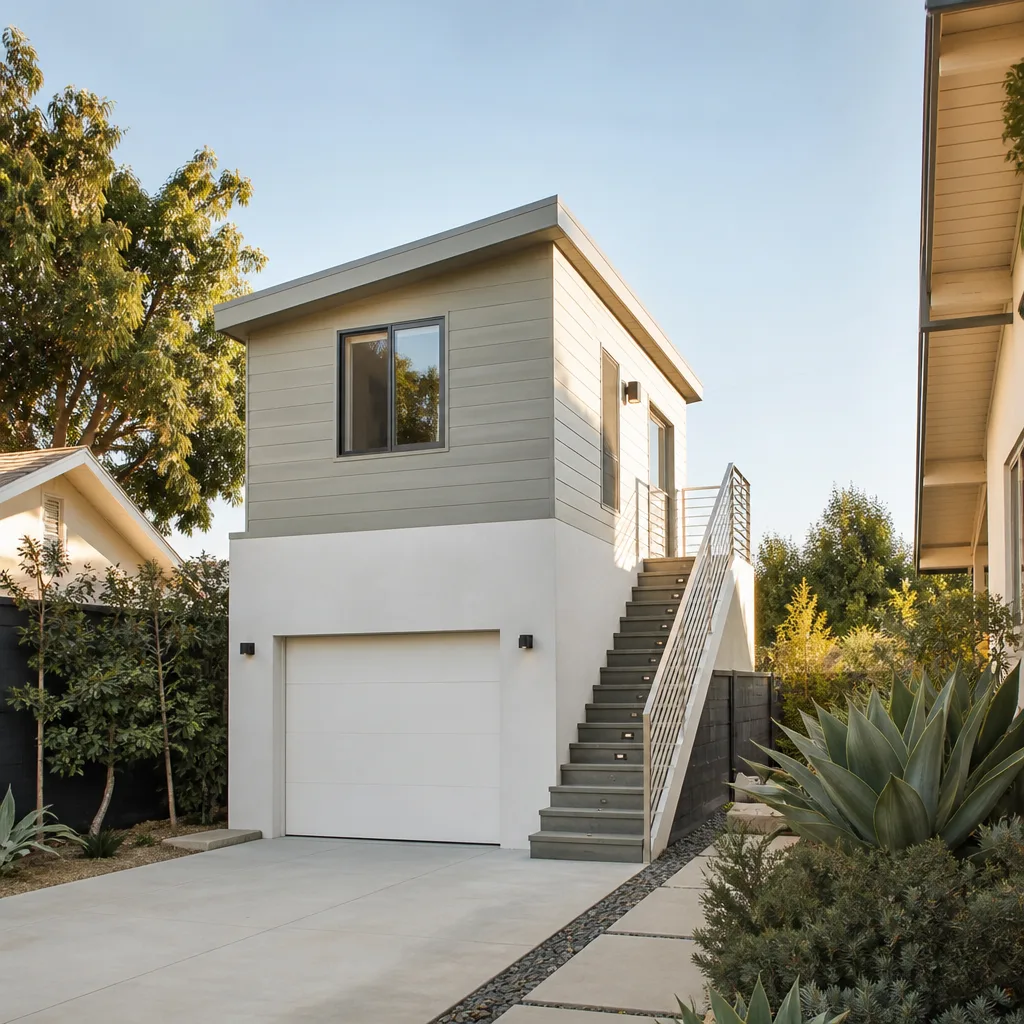
Most ADU problems in Ventura announce themselves early: a sticking door, a stair-step crack, a slow drain, a breaker that trips one too many times, a warm slab under bare feet. The homeowners who catch those signs in the first 18 months spend hundreds on corrections. The ones who wait spend thousands. The difference is knowing which cracks are cosmetic and which are messages, which smells are normal paint and which are hidden rot, and which breaker trip is a one-off and which is a countdown. Document what you see, put your report in writing, and demand the same from your builder: a written price, a written guarantee, and a live person who answers the phone. If you have questions about your ADU, contact Lodgewick ADU Ventura at (831) 230-7250 for a free estimate. We work with leading ADU manufacturers like Abodu, Cover, and Dvele, and we bring the same standard to repairs: the price in writing before the work, the guarantee in writing before the crew leaves, and a live person on the phone whenever you call.
Written by Russ Delmar, Owner at Lodgewick ADU Ventura, serving Ventura since 2010. For more guides & resources, visit our blog.