Title 24 Energy Compliance in Ventura, CA
Title 24 energy compliance for an ADU in Ventura typically costs $1,800 to $4,500 when handled as part of your design and permitting package, and it’s required before the city will issue your building permit. It ensures your accessory dwelling unit, garage conversion, or home addition meets California’s energy efficiency standards for insulation, windows, lighting, and HVAC. At Lodgewick ADU Ventura, we bundle Title 24 documentation into our ADU Design & Permitting in Ventura process so you’re not chasing a separate consultant or stuck holding a permit rejection. Call us at (831) 230-7250 and we’ll tell you exactly what your project needs, in writing, before anything is signed.
If you’re building a detached ADU behind your house in Midtown, converting a garage off Seaward Avenue, or adding a JADU inside your existing footprint near Buena High, Title 24 applies to all of it. The state updated the standards again in 2023, and Ventura’s Building & Safety Division enforces them on every permit submittal. Skip this step and you’ll get a correction notice. Get it wrong and you’ll pay for a second submittal cycle, which most designers charge $450 to $900 to redo. We handle it right the first time because it’s part of our standard scope, not an add-on we spring on you later.
What Title 24 Energy Compliance Actually Covers
Title 24 is California’s building energy code. For an ADU, it sets minimum requirements in five areas: the building envelope, lighting, mechanical systems, water heating, and solar readiness. Here’s what that means for your project in plain English:
- Building envelope: Your walls, roof, and raised floor need specific insulation levels. In Ventura’s coastal climate zone (Zone 6), that typically means R-21 walls, R-38 ceilings, and R-19 floors for a new ADU. Converting an existing garage? The rules get more nuanced depending on whether you’re keeping the original slab and framing.
- Windows and glazing: Every window and glass door needs a maximum U-factor and solar heat gain coefficient. The standard double-pane vinyl windows you’d buy off the shelf usually pass, but big west-facing glass walls toward the ocean breeze can blow the calculation if nobody checks.
- Lighting: All permanently installed fixtures must be high-efficacy LED. This is the easiest box to check, but it’s also the one that trips people up when someone installs a decorative incandescent fixture at the last minute.
- Mechanical and water heating: Your mini-split, heat pump, or furnace has to meet minimum efficiency ratings. A ductless mini-split is the most common Ventura ADU choice because it handles both heating and the marine-layer dampness without oversized ductwork.
- Solar readiness: Most detached ADUs need to be wired and structurally ready for future solar, but the panels themselves aren’t required like they are on new single-family homes. A prefab ADU from a builder like Abodu ships with these provisions already designed in, which can save you a revision cycle.
Each of these gets documented in a compliance report using state-approved software. That report is what Ventura’s plan checkers review. If a number’s off, you’re back in the queue.
When You Need Title 24 Energy Compliance
Short answer: you need it on every ADU, JADU, garage conversion, or home addition that requires a building permit in Ventura. There are no exceptions for small square footage or “just a studio.” If you’re pulling a permit, you’re doing Title 24. Here are the specific moments when it comes up:
- You’re submitting your first permit set to the City of Ventura. The Building & Safety Division won’t accept a residential addition or ADU plan without a Title 24 compliance report attached. No report, no permit number, no exceptions.
- You’re converting an attached garage into a JADU. Garages were never built to residential insulation standards. Expect to add wall insulation, upgrade the slab edge, and replace at least the garage door opening with a proper wall assembly. The energy calc tells you exactly how much is required so you don’t overbuild.
- You’re buying a prefab ADU from a manufacturer. Companies like Dvele and Cover ship units that are already compliant, but the on-site foundation, utility connections, and site work still need local documentation. We handle the Ventura-specific portion and coordinate with the factory drawings.
- Your designer or architect told you to “find someone for Title 24.” This is the classic hand-off gap. Architects design for space and aesthetics. Energy compliance is a separate calculation, and if nobody owns it, it doesn’t get done until the plan checker rejects you. We own it from day one as part of ADU Design & Permitting.
- You’re adding square footage over 500 feet or changing the occupancy of an existing structure. Home additions, second-story bump-outs, and garage-to-living-space conversions all trigger Title 24 review even when they’re not technically ADUs.
- Your existing unpermitted garage conversion is going through the city’s ADU amnesty or legalization process. Ventura has seen a wave of these. Getting an older conversion up to current energy standards is often the most expensive line item, but it’s non-negotiable once the city is involved.
Why Title 24 Trips Up Even Experienced Builders
Every city in Ventura County has its own quirks, and Ventura is no different. Here’s what we see regularly on job sites across the city, from College Area to East End:
Climate zone confusion. Ventura sits in Climate Zone 6, but parts of the foothills and inland stretches can be treated differently depending on elevation and microclimate. If a compliance consultant runs your project under Los Angeles’s Zone 9 assumptions, your insulation package gets under-specced. We’ve corrected that on permits that other designers already submitted.
Prescriptive vs. performance compliance. The state gives you two paths. Prescriptive means you just meet every minimum requirement, line by line. Performance means you model the whole house, which lets you trade a better window package for less roof insulation, for example. Most Ventura ADUs succeed on the performance path because it gives you flexibility with skylights, glass doors, and vaulted ceilings. But it requires someone who actually knows the software, not someone checking boxes.
Garage conversion slabs. A detached garage on an uninsulated slab loses heat through the concrete. Title 24 has slab-edge insulation requirements that are easy to miss if you’re converting an existing structure rather than pouring new footings. In the Midtown area we’ve seen permit corrections specifically over missing slab-edge R-value documentation.
Window-to-wall ratios on west-facing elevations. Homeowners love big glass facing the Channel Islands view. But too much glazing on a west wall drives up cooling loads in the late afternoon when the sun drops over the ocean. The performance calculation has to account for it, and sometimes the answer is a higher-efficiency window rather than less glass. James Hardie lap siding and a properly specced window package can work together to hit the numbers without sacrificing the view.
Our Title 24 Energy Compliance Process
We fold energy compliance into our ADU design and permitting workflow so you never have to think about it as a separate task. Here’s how it works when you build with Lodgewick ADU Ventura:
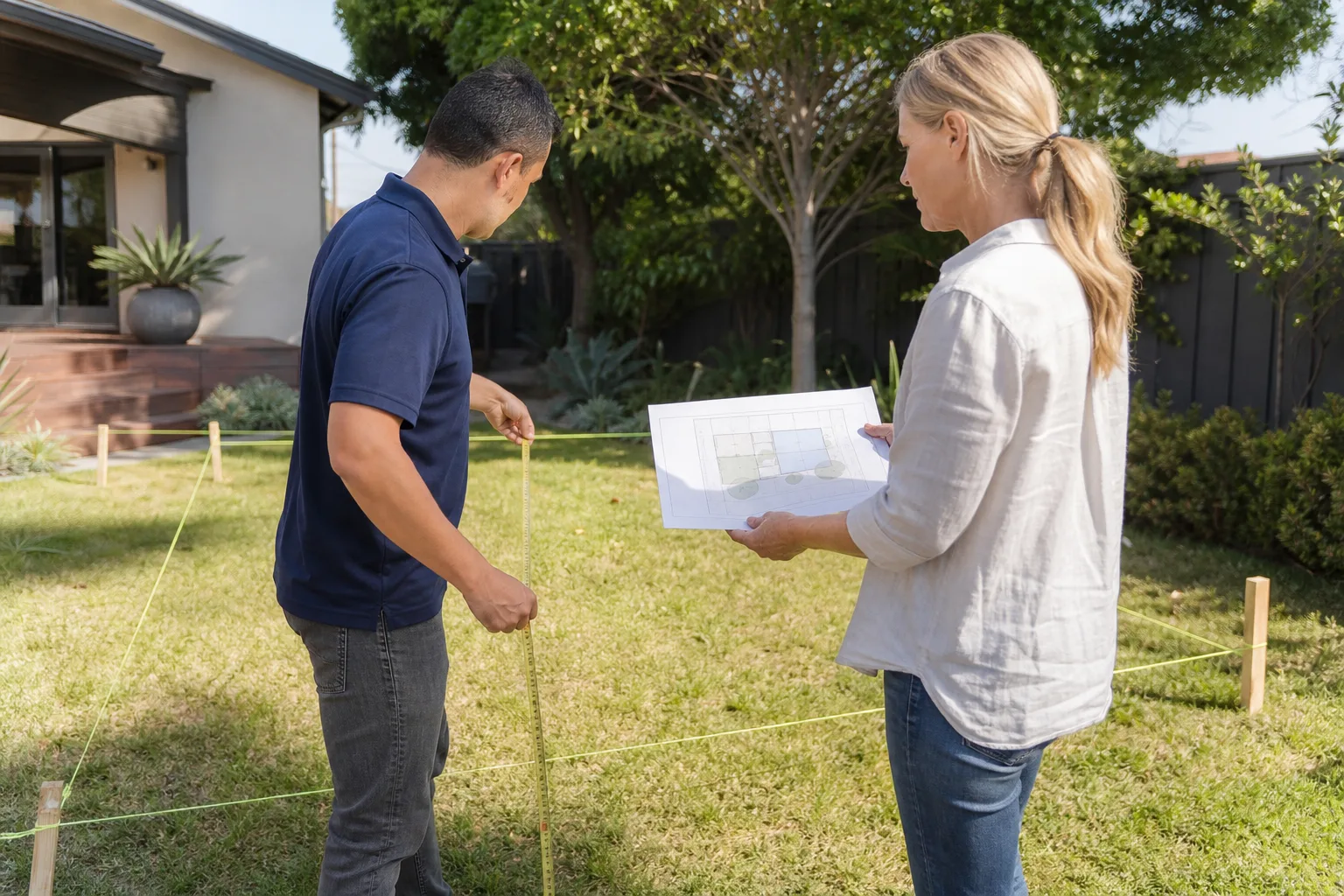
- Project walk and measurement. We come out to your Ventura property, measure the existing structure if there is one, document window sizes and orientations, and note the roof assembly. This takes about 90 minutes and gives us the inputs we need for an accurate energy model. Russ Delmar or one of our senior designers handles this step personally.
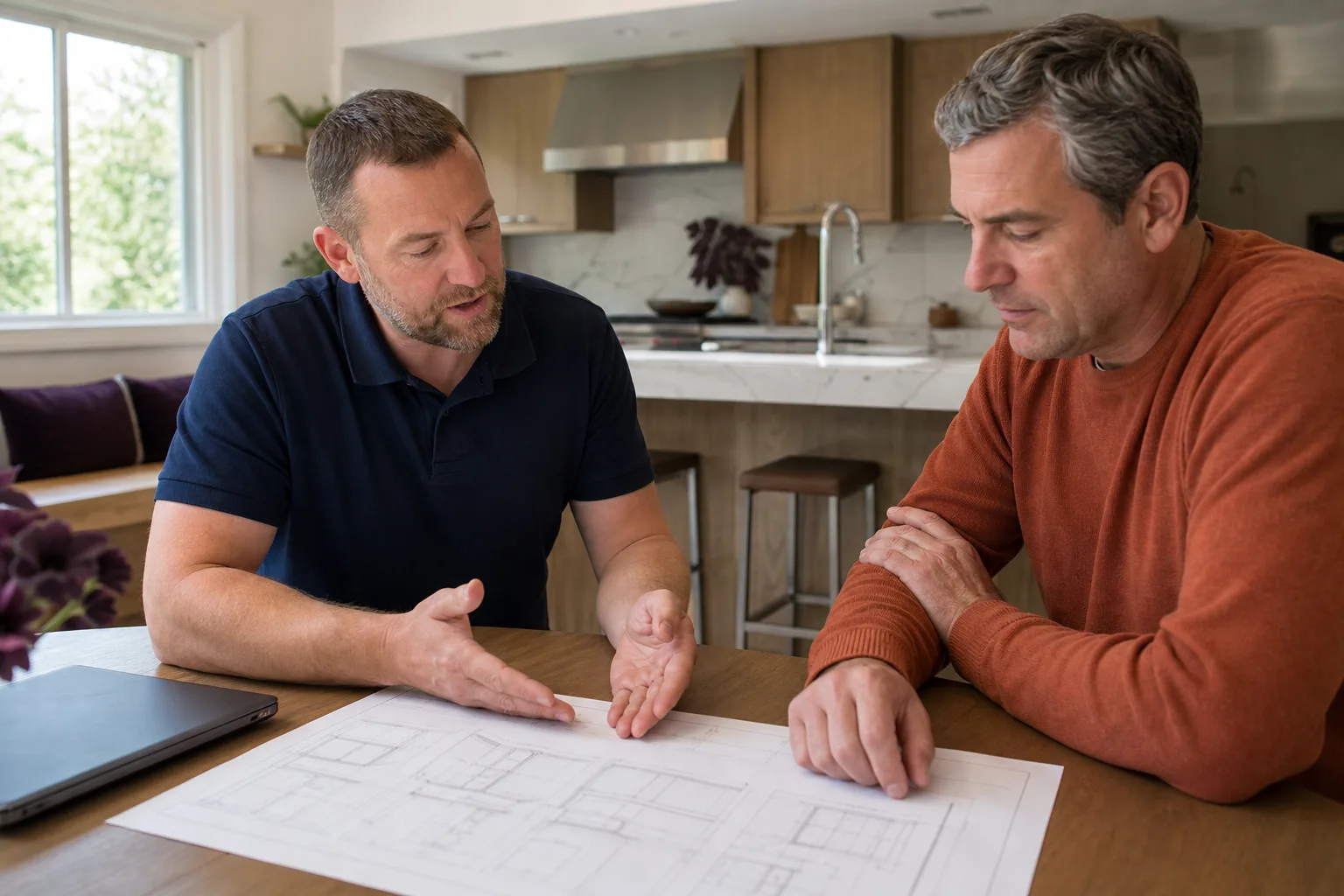
- Design iteration with energy in mind. We run early energy calculations alongside the floor plan design, not after it. That means if your dream layout needs a tweak to pass Title 24, you find out in week two, not week ten. It also means we can recommend the right insulation package, window specs, and HVAC sizing before you’ve committed to anything.
- Compliance modeling and documentation. Using state-approved software, we generate the CF-1R compliance forms and the mandatory compliance report. These are the exact documents Ventura’s plan checkers require. We review them against the city’s current submittal checklist, which changes more often than most people realize.
- Integration with your permit set. The Title 24 documents go into your permit package alongside the architectural drawings, structural calcs, and site plan. One submittal, one review cycle, no last-minute scramble. You get a written price for the complete package before we do any work.
- Inspection support through final sign-off. When the city inspector comes out for insulation and final inspection, we’re available to walk the site and verify the installed work matches the compliance documents. If an inspector flags an item, we address it. That’s part of the 365-Day Done Right Promise, and it’s in writing.
The Kingswell Way applies here just like it does on the construction side. We say the price before the work, show up in the window we give you, leave your paperwork cleaner than we found it, and put every commitment in writing. If something in our compliance package gets rejected due to our error, we fix it at no charge.
How Title 24 Fits With Prefab ADU Brands
Ventura homeowners sometimes assume prefab means “already permitted.” It doesn’t. A factory-built ADU from Abodu arrives with compliance-friendly specs, but the Title 24 documentation still has to be generated for your specific site. A Cover unit gets modeled against the exact orientation and window placement on your lot. A Dvele home ships with impressive envelope performance, and we still run the local calculations to prove it to Ventura’s plan checkers. We work with these brands and their factory drawings regularly, so you get the benefit of our experience without having to play translator between the manufacturer and the city.
Title 24 Energy Compliance Pricing in Ventura
Title 24 compliance costs vary based on project size, complexity, and whether we’re doing it as part of a larger design package or as a standalone service. Here are honest ranges for the Ventura market:
- Standalone Title 24 compliance for a simple ADU (under 750 sq ft): $1,800 to $2,600. This covers the energy model, CF-1R documentation, and one revision cycle.
- Title 24 as part of full ADU design and permitting: Included in our package pricing, typically $8,500 to $16,000 for the complete permit-ready set. You don’t pay extra for the energy documentation.
- Garage conversion with existing structure analysis: $2,200 to $3,800, because we’re measuring an existing assembly rather than working purely from new-build specs.
- Complex projects with high glass area or non-standard assemblies: $3,000 to $5,500. Big window walls, cathedral ceilings, or mixed old-new construction all add modeling time.
- Revision cycles after a city correction: Included in our scope up to two rounds. Third-round corrections from unforeseen plan-check comments run $450 to $750.
What affects the price most? Square footage is a minor factor compared to window area, existing-structure variables, and whether you’re pursuing prescriptive or performance compliance. A 1,200-square-foot prefab with standard windows can cost less to document than a 600-square-foot garage conversion with a vaulted ceiling and a wall of glass.
Every quote from Lodgewick ADU Ventura is a written price before any work starts. No price changes when the plan checker asks a question, no surprise fees when you need a second revision. Call (831) 230-7250 and you’ll get a real number, not a “we’ll see.”
What Happens If You Skip Title 24 or Get It Wrong
The consequences are concrete, not theoretical. Here’s what Ventura homeowners actually experience when Title 24 goes unhandled:
Permit rejection on first submittal. Ventura’s plan check is backed up enough that a correction notice adds two to four weeks to your timeline. Most design firms charge for resubmittal, and some charge for the original submittal fee again if the city requires it.
Failed final inspection. If the built work doesn’t match the compliance documents, the inspector won’t sign off. You can’t get a certificate of occupancy, which means you can’t legally rent the ADU. For homeowners counting on rental income to pay for the build, every month of delay is real cash out the door.
Higher utility bills forever. The energy code isn’t arbitrary. A Ventura ADU that meets Title 24 standards uses 30 to 50 percent less energy for heating and cooling than one that doesn’t. Skimp on insulation or buy cheap windows and you’ll feel it in your SCE bill every month, especially during the late-summer heat waves when the marine layer doesn’t arrive until after dark.
Resale and refinance problems. Unpermitted or non-compliant work gets flagged during appraisals and inspections. Buyers’ lenders won’t touch a property with unresolved code violations, and you’ll be stuck either fixing it or discounting the price.
Ventura-Specific Code Notes We Handle Every Week
Working Title 24 in Ventura means knowing the local layer on top of the state code. These are the details we navigate routinely:
The City of Ventura’s submittal checklist requires the compliance report to be generated with the exact project address. Use a placeholder and you’ll get booted. We generate everything with your parcel number and legal description from the county assessor’s database.
Ventura’s coastal zone brings a marine climate that affects cooling calculations. The sea breeze keeps a lot of west Ventura cooler than inland neighborhoods, but late-afternoon sun loads on west-facing glass are just as strong. Our energy models reflect actual local weather data, not generic state averages.
Older neighborhoods like Midtown and the Avenues have deep lots with sun exposure patterns that differ from tract-home subdivisions. A garage conversion tucked behind a two-story neighbor needs different window specs than a standalone ADU in an open East End yard. These are the things you learn from doing hundreds of local projects, not running software blindly.
Some Ventura properties fall into fire-hazard severity zones in the foothills. That triggers additional building code requirements that intersect with Title 24, particularly around exterior materials and ventilation. James Hardie fiber cement siding meets those requirements and works well with energy-compliant wall assemblies, which is why we spec it often.
How Title 24 Relates to Your Full ADU Project
Title 24 is one piece of a bigger puzzle, and it sits alongside ADU Design & Permitting, structural engineering, and construction. The sequence matters. Here’s how it fits:
- Design phase: We run preliminary energy checks while we’re still laying out your floor plan. This prevents a design you love from failing compliance late in the process.
- Permitting phase: The compliance documents go into your permit set as part of a complete package. One submittal, one fee, one review.
- Construction phase: The insulation, windows, and HVAC specs from your compliance report guide the build. Our construction partners build to the approved documents, not from memory.
- Inspection phase: We verify the built conditions match the paperwork so you pass insulation and final inspection without corrections.
A lodge is a small house on a larger property. That’s exactly what an ADU is, and that’s the idea behind Lodgewick. We focus on accessory dwelling units and garage conversions because that’s the specific thing we’re good at, not because it’s one service among forty. Every ounce of our permitting experience, including Title 24, feeds into making sure your ADU gets approved, built, and signed off without you having to learn the building code yourself.
FAQs – Title 24 Energy Compliance
How much does Title 24 energy compliance cost for an ADU in Ventura?
Title 24 compliance in Ventura costs $1,800 to $5,500 depending on project size, window area, and whether the work is standalone or bundled with full design and permitting. Most single-story ADUs under 750 square feet fall in the $2,000 to $3,000 range when quoted separately, and it’s included in our full design package. Call (831) 230-7250 for a written quote specific to your project.
Can you do Title 24 compliance for a project that’s already designed?
Yes. We regularly take design sets from other architects and designers who didn’t include energy compliance. We’ll review the drawings, flag anything we see that won’t pass before we run the report, and deliver the CF-1R documentation ready for submittal. Bring us your plans and we’ll tell you the price in writing before we start.
How long does Title 24 compliance take?
For a standalone compliance report on a straightforward ADU, we typically turn it around in five to seven business days. More complex projects with custom window packages or existing-structure variables take one to two weeks. When we’re handling your full ADU Design & Permitting package, the compliance documents are ready at the same time as your permit set, so there’s no added wait.
Do prefab ADUs from companies like Abodu or Cover need separate Title 24 work?
Yes, they do. The factory unit may be designed to meet California energy standards, but Ventura’s plan checkers require site-specific documentation showing your exact unit, on your exact lot, with your exact orientation and window placement. We coordinate with the manufacturer’s drawings and handle the Ventura-specific compliance work so the prefab and the permit speak the same language.
Is there any way to get an ADU exempt from Title 24?
No. Title 24 applies to all new residential construction and most alterations in California, including ADUs, JADUs, garage conversions, and home additions of any size. There’s no square-footage threshold for exemption. The only question is which compliance path you take, and that’s a strategic choice we help you make based on your design and budget.
What’s the cheapest way to pass Title 24 in Ventura?
Use the prescriptive path: standard double-pane vinyl windows, minimum code insulation, and LED lighting throughout. That’s the lowest up-front documentation cost and the simplest build. The trade-off is less design flexibility. If you want big glass doors, skylights, or a vaulted ceiling, the performance path costs more to document but gives you room to design what you actually want. We’ll show you both prices and let you decide.
Key Takeaways
- Title 24 energy compliance is required for every permitted ADU, JADU, garage conversion, and home addition in Ventura. There are no exemptions.
- Standalone compliance runs $1,800 to $5,500 in Ventura. Bundled with full design and permitting, it’s included in our package price.
- The documents you need are the CF-1R compliance forms, generated with your exact parcel number and submitted with your permit set.
- Getting Title 24 wrong means permit rejection, failed inspections, and weeks of delay. Getting it right means one smooth submittal and a signed-off final.
- Lodgewick ADU Ventura includes energy compliance in our ADU Design & Permitting scope, with a written price before any work starts and the 365-Day Done Right Promise behind it.
Get Your Title 24 Compliance Handled in Ventura
If you’re planning an ADU, JADU, or garage conversion in Ventura, don’t let energy compliance be the thing that stalls your permit. We’ll handle it as part of your design and permitting package or as a standalone service if you’ve already got plans. You’ll get a written price before we start, a real arrival window, and a documented guarantee that follows every project. Call Lodgewick ADU Ventura at (831) 230-7250 for a free Title 24 assessment on your property. A live person answers, day or night, not a voicemail tree.
For a broader look at how energy compliance fits into your project, see our ADU Design & Permitting in Ventura page, or head back to our home page to explore everything we do.
Written by Russ Delmar, Owner at Lodgewick ADU Ventura, serving Ventura.