Tuff Shed New Detached ADU: The Ventura Owner’s Guide
For a Tuff Shed new detached ADU in Ventura, we stock and install the structural components, framing hardware, anchorage systems, and enclosure parts that commonly fail on converted and upgraded Tuff Shed structures. Installed pricing for most replacement parts on a Tuff Shed detached ADU runs between $180 and $1,400 depending on whether we’re replacing a single anchor bracket or re-flashing an entire roof-to-wall transition. We carry Tuff Shed-compatible components on our trucks for the most common failure points, and most Ventura jobs are completed in a single visit.
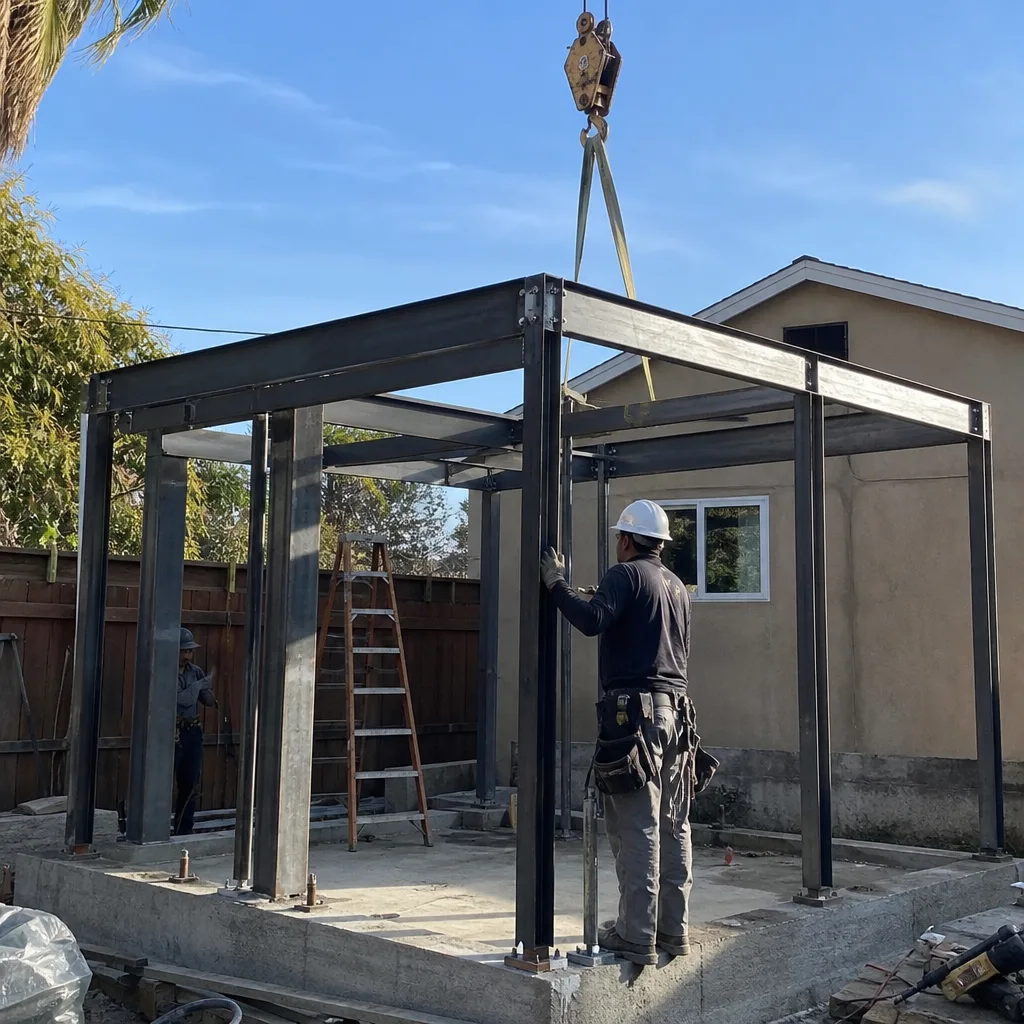
How owners usually find us: they walk out to their Tuff Shed ADU after a heavy coastal wind event or a rainy stretch, and notice something that wasn’t there before. A corner pulling away from the foundation. Water staining at the floor line. A door that suddenly binds. These structures are built light, and the connection points, not the framing itself, are almost always where the trouble starts.
Which Tuff Shed Models This Applies To
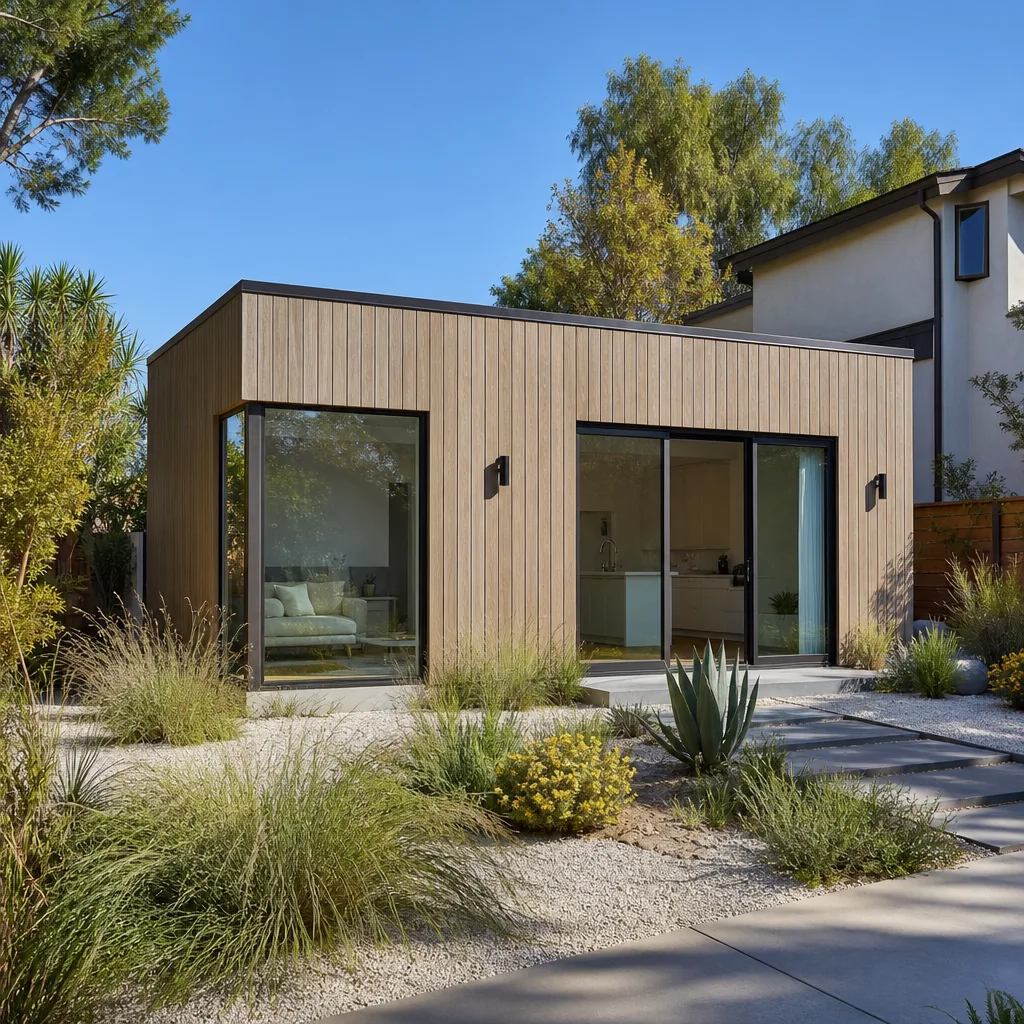
The parts we cover apply primarily to Tuff Shed’s Premier Pro and Pro Studio series when those structures have been upgraded to accessory dwelling use, plus any Tuff Shed building that’s been site-modified for Title 24 compliance. The critical compatibility point for Ventura homeowners: Tuff Shed manufactures to a national spec, but California’s detached ADU code requires additional anchorage, shear reinforcement, and moisture management that the stock building does not always include. If you have a Tuff Shed ADU that was permitted and converted locally, the parts you need are often a mix of Tuff Shed OEM and site-installed upgrade components.
To identify the right replacement part, look for the serial number plate mounted on the interior of the door header or on the rear wall framing. That plate gives us the model line, build date, and factory configuration. For anchorage and tie-down components, measure what’s there now rather than trusting the model number alone. Site conversions vary, and we’ve seen two identical Pro Studio units from the same year with completely different foundation attachment layouts because different contractors did the original ADU conversion.
OEM Tuff Shed components are well-made for standard shed use, but for ADU duty in coastal Ventura, we often recommend quality aftermarket equivalents with higher corrosion resistance. The factory anchor brackets are zinc-plated steel. In Ventura’s salt air, we replace those with hot-dipped galvanized or stainless hardware rated for coastal exposure. It costs more upfront, but you are not redoing it in five years.
Signs Your Tuff Shed New Detached ADU Is Failing
- Visible gap between the floor plate and the foundation slab. This is usually an anchorage problem. Tuff Shed floor framing relies on perimeter anchoring, and when anchor bolts loosen or the factory brackets stretch under uplift loads, the structure starts to move independently of the slab. Left alone, this gap lets water in and eventually compromises the entire structure-to-foundation connection.
- Water staining at interior wall bases after rain. The factory wall-to-floor flashing on Tuff Shed structures is designed for a shed, not a finished living space. When the building is insulated, drywalled, and occupied, that flashing is doing more work than it was engineered for. Staining means the capillary break is failing and water is wicking up into your sill plates.
- Doors or windows suddenly bind or won’t close properly. This indicates racking, which means your shear reinforcement is insufficient or degrading. Tuff Shed factory walls use minimal sheathing, and when ADU conversion skips proper plywood shear panels, the entire box flexes. Coastal wind loads in Ventura exaggerate this quickly.
- Draft you can feel around the roof-to-wall junction. The factory roof connection on many Tuff Shed models uses simple fasteners and minimal overhang flashing. When that connection loosens or the flashing fails, air moves through the gap, taking conditioned air out and moisture in. This is a common failure point on conversions where insulation was added without addressing the structural gap first.
- Rust streaks or corrosion blooming on exposed metal connectors. In Ventura’s marine environment, zinc-plated hardware corrodes visibly within three to five years. Rust streaks running down from anchor brackets or roof tie-downs mean the protective coating has failed and the metal is actively losing structural capacity. This is the one to take seriously, because those connectors are the only thing keeping the building on the ground during a wind event.
Replacement Cost & What’s Included
For Ventura Tuff Shed ADU owners, here’s what we typically see on replacement work:
- Foundation anchorage replacement (single corner or section): $180 – $450 installed, including new hot-dipped galvanized brackets, concrete anchors, and backing washers
- Full perimeter re-anchorage (detached ADU): $900 – $1,400 installed, including seismic strapping where required by current Ventura County code
- Roof-to-wall flashing replacement: $240 – $600 depending on linear footage and whether existing roofing must be lifted
- Shear panel addition (one wall section): $350 – $800 including paneling, fasteners, and finishing to the interior surface
- Door threshold and sill repair (single opening): $150 – $350 including replacement threshold, flashing, and sealant
The spread usually comes down to access, the condition of what we’re attaching to, and whether permits are required. A simple bracket swap on an accessible corner is quick. Re-anchoring a structure that’s settled or shifted involves jacking, shimming, and realignment. We provide a written price before work starts, per The Kingswell Guarantee, and a written guarantee on the parts and labor. If a replacement fails within the 365-day guarantee period, we come back and make it right at no charge.
DIY or Call Us?
For a Tuff Shed ADU, there is a honesty split here. You can safely inspect for loose anchor bolts, visible rust, and water staining without any special equipment. You can check whether doors bind and whether you feel drafts. What you should not do is attempt anchor replacement, shear panel installation, or any work that involves lifting or jacking the structure. The loads on an occupied ADU are not the same as a garden shed. If a connector fails while the building is under stress in a coastal wind event, the structure comes apart. This is not a hand-tools weekend project.
Where we see DIY go wrong most often: someone buys a box of concrete anchors from the hardware store and drives them into an existing slab without checking for cracks, edge distance, or embedment depth. Or someone re-tightens a stripped anchor bolt and calls it good. What they miss is the connection point already compromised. We pull the old hardware, inspect the slab and the sill plate, and install properly spec’d replacement hardware. If you would rather we handle it, call (831) 230-7250 and we will figure out what you need.
Frequently Asked Questions
In Ventura’s coastal environment, factory zinc-plated connectors typically last five to eight years before visible corrosion develops, while hot-dipped galvanized or stainless replacements installed by a professional typically last twenty to thirty years. The salt air is the primary accelerating factor, and it acts faster on structures within a mile of the ocean.
That depends on what failed. A loose anchor bolt can sometimes be re-tensioned if the slab and sill plate are in good condition, but a corroded or bent bracket always gets replaced. We repair when it is structurally sound to do so and replace when it is not. Russ Delmar and our crew will tell you which one applies to your situation before any work is quoted. Call (831) 230-7250 for an assessment and a written estimate.
Most single-part replacements, like a corner anchor bracket or a door threshold, are completed in one visit lasting two to four hours. Full perimeter re-anchorage or shear panel work typically takes one to two days. We give you a defined arrival window before we show up, and the job site is left cleaner than we found it.
We stock the most commonly needed Tuff Shed-compatible components on our service vehicles: hot-dipped galvanized anchor brackets, stainless fasteners in the common sizes, corrosion-resistant flashing materials, and shear panel stock. Unusual or custom components are ordered with a typical two-to-four-day lead time. If we have to order, you’ll know before we start, not after.
No. Lodgewick ADU Ventura puts the price in writing before any work starts, and that number does not change at the door. If we find something unexpected during the job, we stop, explain what we found, and give you a new written price before continuing. The Kingswell Guarantee is specific about this: a written price first, every time, no exceptions. If you’re weighing repair options and want a real number, call (831) 230-7250 for a free estimate.
One thing worth saying plainly: Lodgewick ADU Ventura is an independent service provider. We are not affiliated with Tuff Shed, Abodu, Cover, or Dvele, though we work with components and materials from all four when the project calls for it. We simply know these structures well, we stock what fails, and we stand behind the work in writing.
Tell me what you need the space to do, and I’ll tell you what it actually costs to get there. Then we will put that number in writing and get to work.
Written by Russ Delmar, Owner, Lodgewick ADU Ventura at Lodgewick ADU Ventura, serving Ventura and nearby areas.