James Hardie Site Prep & Utilities: The Ventura Owner’s Guide
Site prep and utilities for a James Hardie project in Ventura typically runs $3,500 to $12,000 depending on lot slope, soil condition, and how far your sewer and water lines need to travel. We stock the common prep materials and utility fittings on our trucks, so most Ventura jobs get a written quote within a day or two of the site walk. Homeowners usually call us when they realize their existing pad is failing, their setback doesn’t leave room for the unit they bought, or their utility connections won’t pass inspection the way they currently sit.
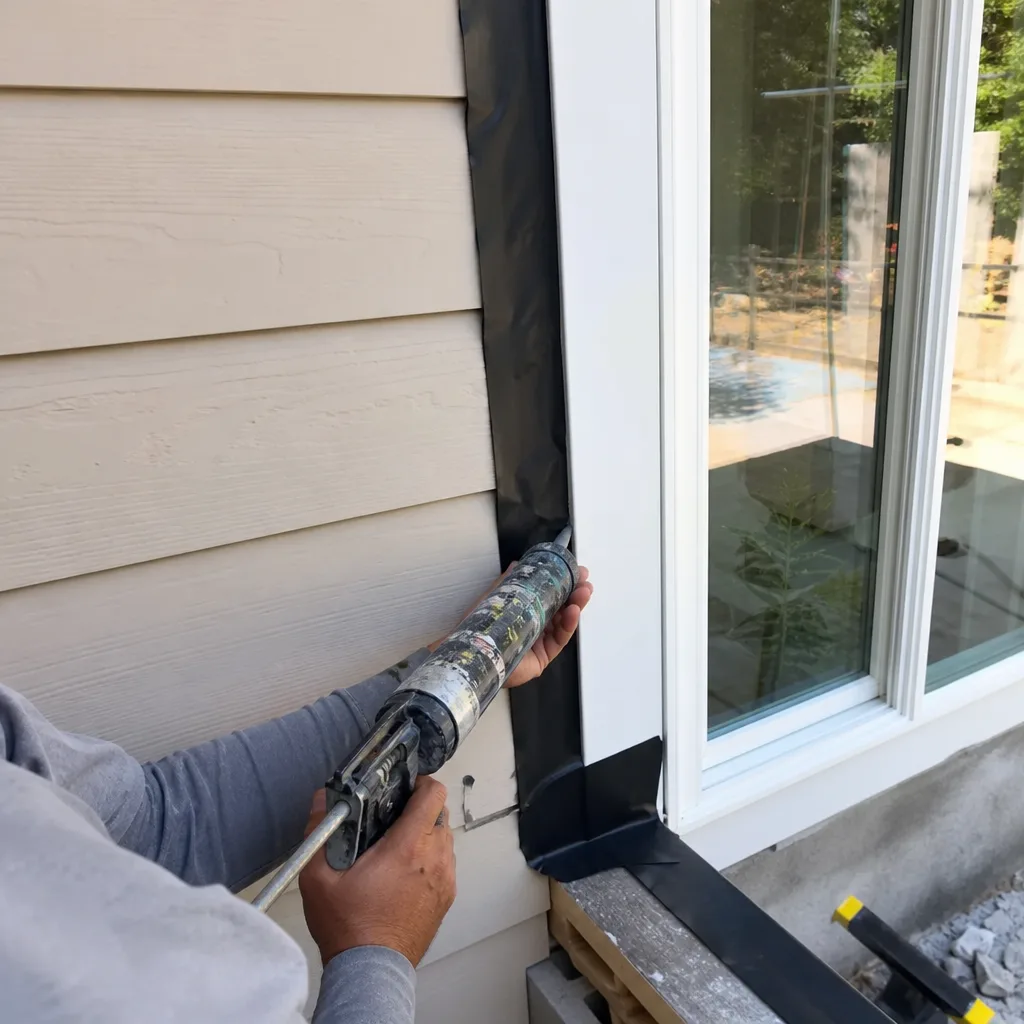
Here’s the thing most people miss: James Hardie siding and trim are only as good as what they’re attached to. A foundation pad that settles or a water line that’s undersized will cause problems long after the Hardie product would have held up fine on its own. That’s the part we focus on.
Which James Hardie Models This Applies To
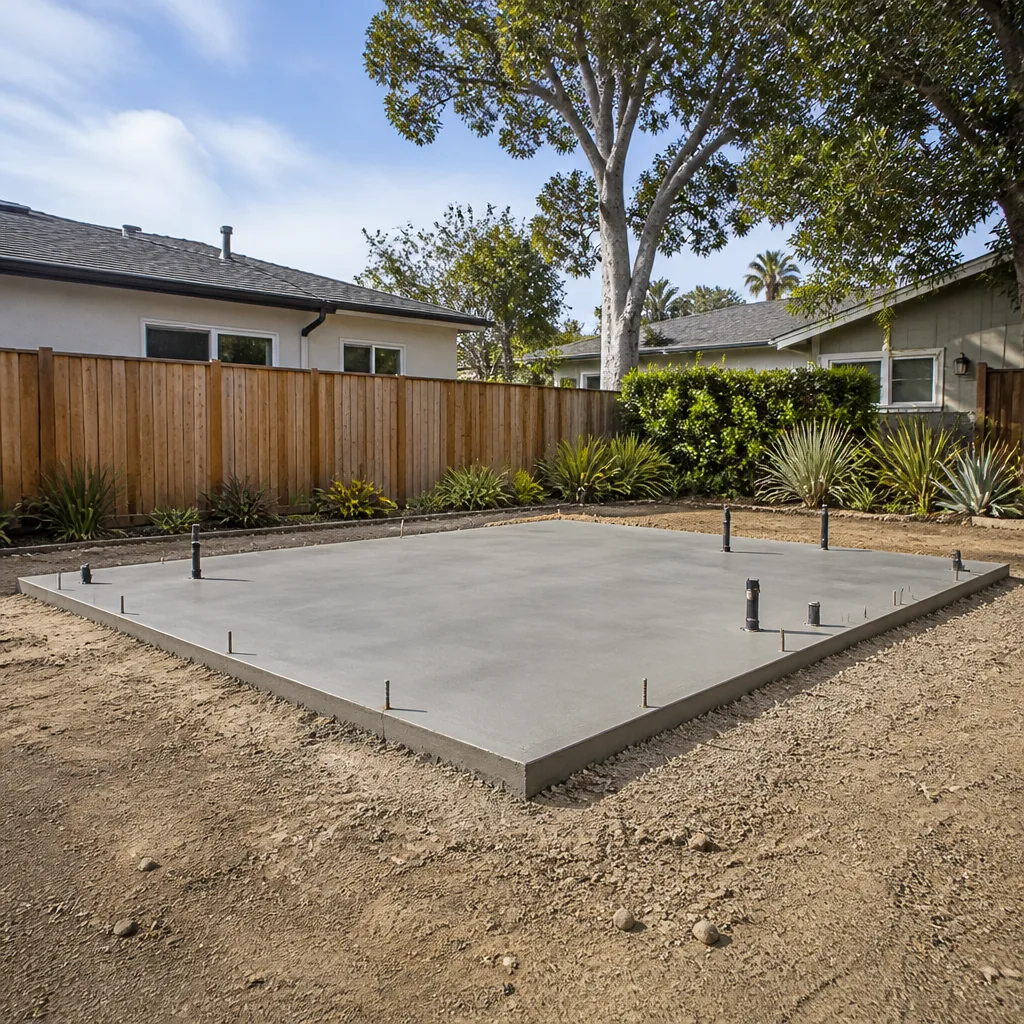
Site prep and utilities aren’t tied to a specific HardiePlank or HardiePanel SKU, but they are tied to the structure type. If you’re putting up a detached ADU with James Hardie siding, a garage conversion with Hardie trim, or a backyard unit with HardiePanel sheathing, the prep work follows the same Ventura-specific rules. The key compatibility question is what your foundation system needs to support the wall assembly you’ve chosen, plus what your utility trenching has to work around.
For factory-built units from manufacturers like Abodu, Cover, or Dvele that arrive with James Hardie cladding already attached, the prep work has to match the manufacturer’s foundation specifications exactly. Those specs don’t leave much wiggle room, and a pad poured half an inch off tolerance can void the manufacturer’s own warranty before the unit even lands. For stick-built additions using Hardie materials, there’s more flexibility, but the utility routing still has to meet Ventura’s current code for trench depth, backfill, and cleanout placement. We’ll identify what you have by checking the stamped manufacturer tags on any prefab components and measuring the slab or foundation against the site plan, then give you a straight answer about what matches and what doesn’t.
Signs Your James Hardie Site Prep & Utilities Is Failing
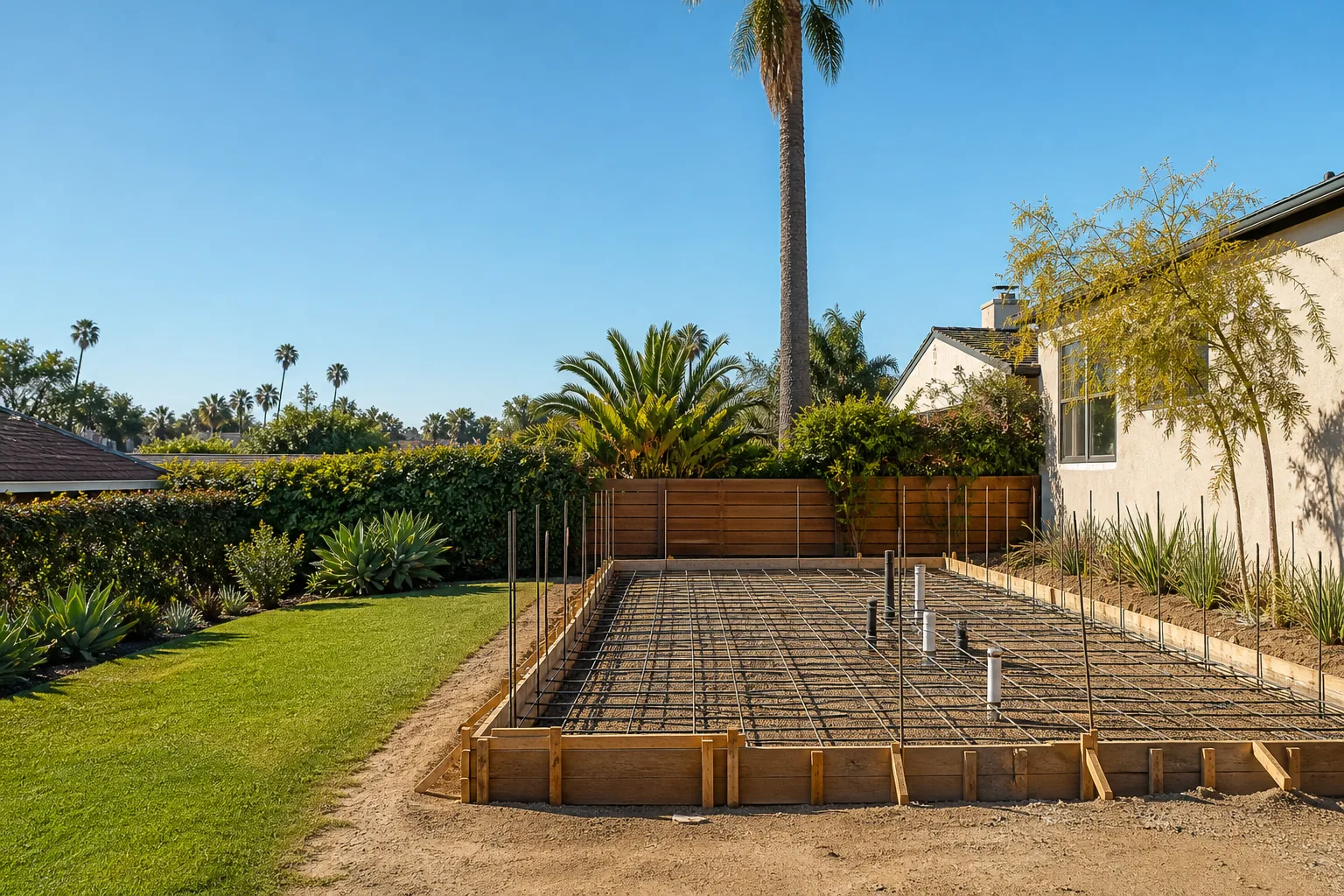
- Slab cracks that run corner to corner. In Ventura’s clay-heavy soils, seasonal expansion and contraction puts real stress on a shallow pour. A crack wider than a quarter inch usually means the pad wasn’t reinforced for local soil movement and will keep opening.
- Water pooling against the foundation edge. Poor grading or a missing French drain sends runoff right where it shouldn’t go. Over a Ventura rainy season, that saturates the soil under the slab and you’ll see doors start to stick as the structure shifts.
- Utility lines that surface or get exposed. If a sewer cleanout or water line is sitting above grade or barely covered, it wasn’t trenched to Ventura’s required depth. Freeze isn’t the worry here; it’s root intrusion and accidental piercing from routine yard work.
- Electrical service that can’t carry the load. A subpanel that trips when the mini-split and the dryer run simultaneously tells you the service wasn’t sized for the ADU’s actual draw. This shows up more often in garage conversions, where the old garage wiring gets pushed past its original intent.
- Trench settling that leaves a depression across the yard. Backfill that was dumped without compaction will sink within a year. You’ll see a shallow trough running from the street or house to the unit, and it only gets worse after the first good rain.
Replacement Cost & What’s Included
For a full site prep and utility package in Ventura, a typical range looks like this:
- Slab repair or repour (detached unit pad): $4,000 to $9,500 depending on square footage, reinforcement, and whether the old concrete needs haul-off
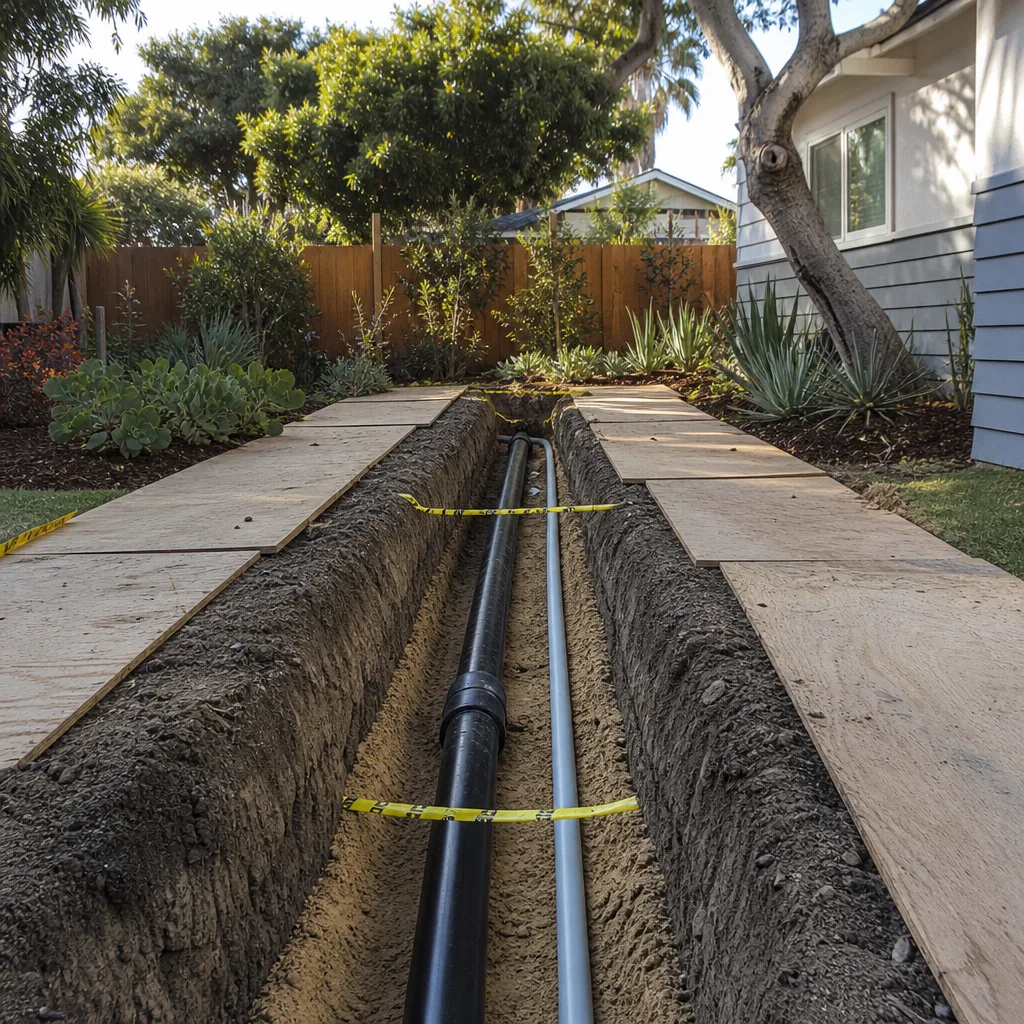
- Utility trenching and rough-in (water, sewer, electric): $3,500 to $7,000 for typical Ventura lot setbacks of 30 to 60 feet from the main house
- Grading and drainage correction: $800 to $2,800 for standard yard regrading plus a surface drain or French drain where the soil calls for it
- Subpanel and service upgrade: $1,200 to $3,000 depending on amperage and panel location
The spread on these numbers comes down to access (can we get a mini-excavator into your backyard, or is it hand digging?), soil type (Ventura’s clay is forgiving until it isn’t), and what the inspector needs to see before sign-off. Every quote we give in Ventura is a written line-item price before any work starts, and it stays that number unless you change the scope. If the prep work fails within 365 days, we come back and fix it under the Done Right Promise.
DIY or Call Us?
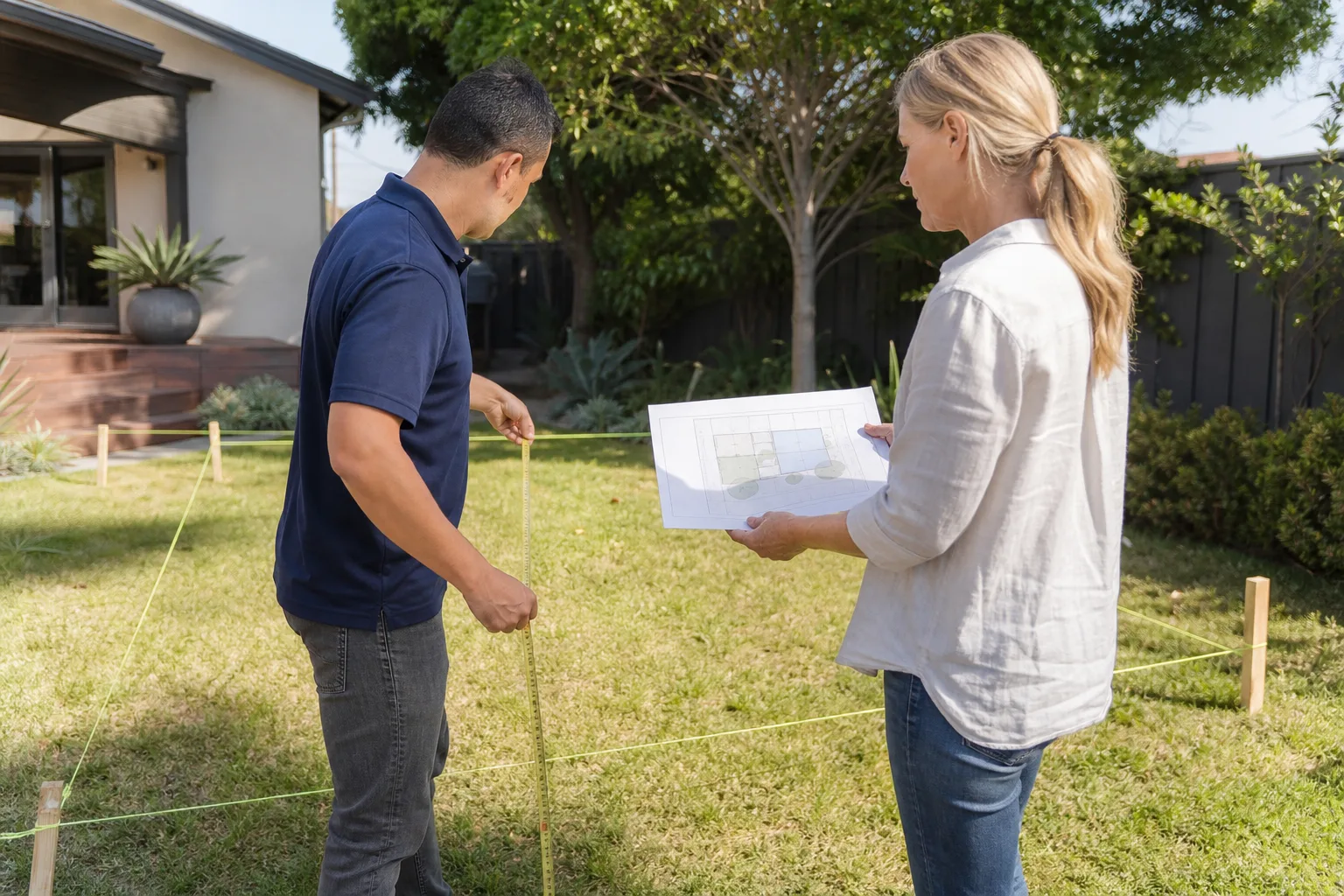
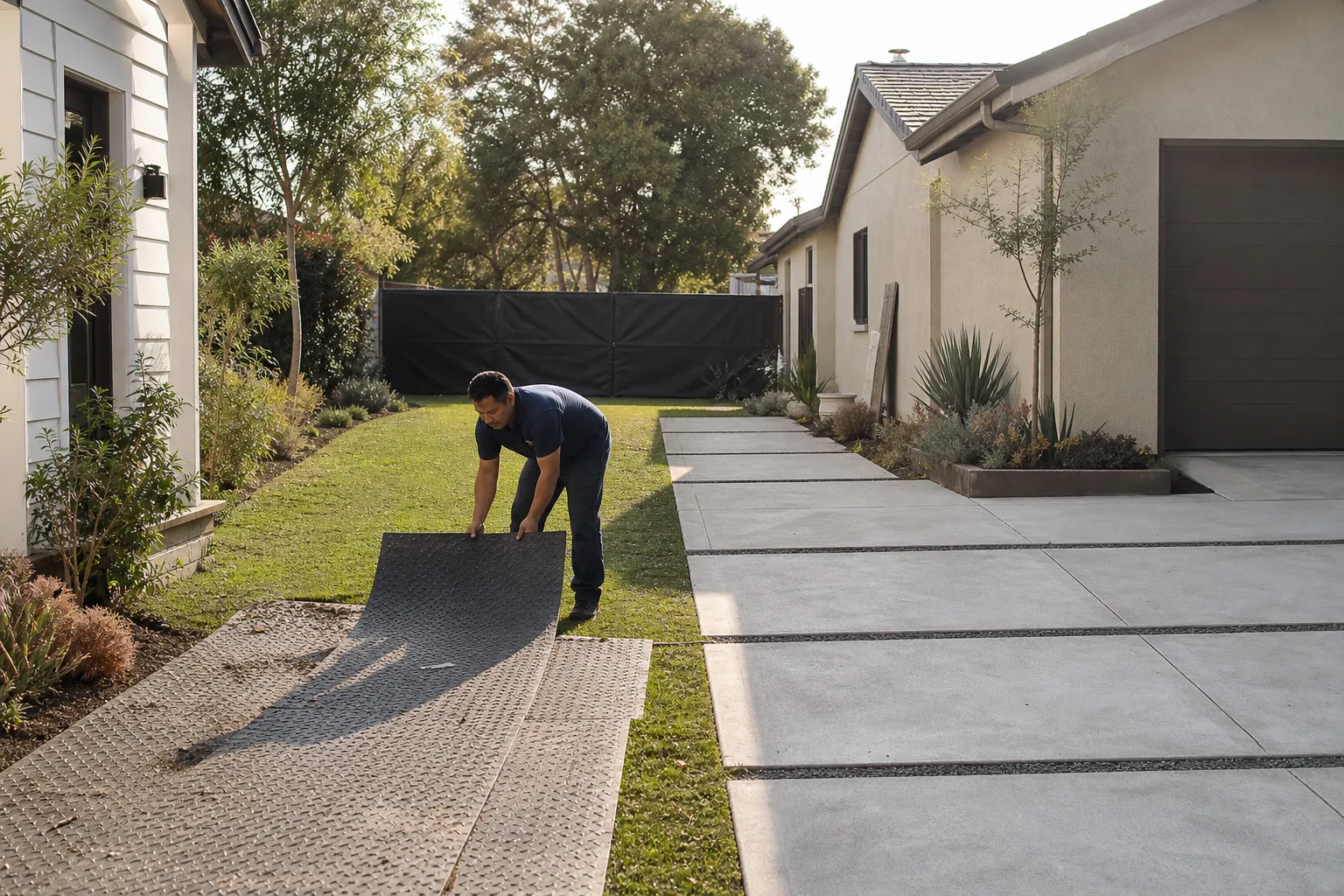
There is one area of site prep where you can save yourself some trouble before we even arrive: clearing the work zone. Move planters, outdoor furniture, and anything fragile away from where the trenching or pad work will happen. That’s safe, simple, and saves you money on labor. What you shouldn’t touch is anything involving the actual utility connections. Cutting into a live water main, exposing a sewer line without the right fall, or pulling wire into a panel without a permit is how people get hurt and how permits get red-tagged in Ventura. Trenching near existing gas or electrical lines in older Midtown lots is genuinely dangerous, and we’d always rather see a homeowner call first than dig first.
If you’re not sure whether your existing pad or utilities can carry the James Hardie project you’ve got planned, call us at (831) 230-7250. We’ll walk the site, tell you what’s good, what’s marginal, and what needs to come out. No charge for the conversation.
FAQs
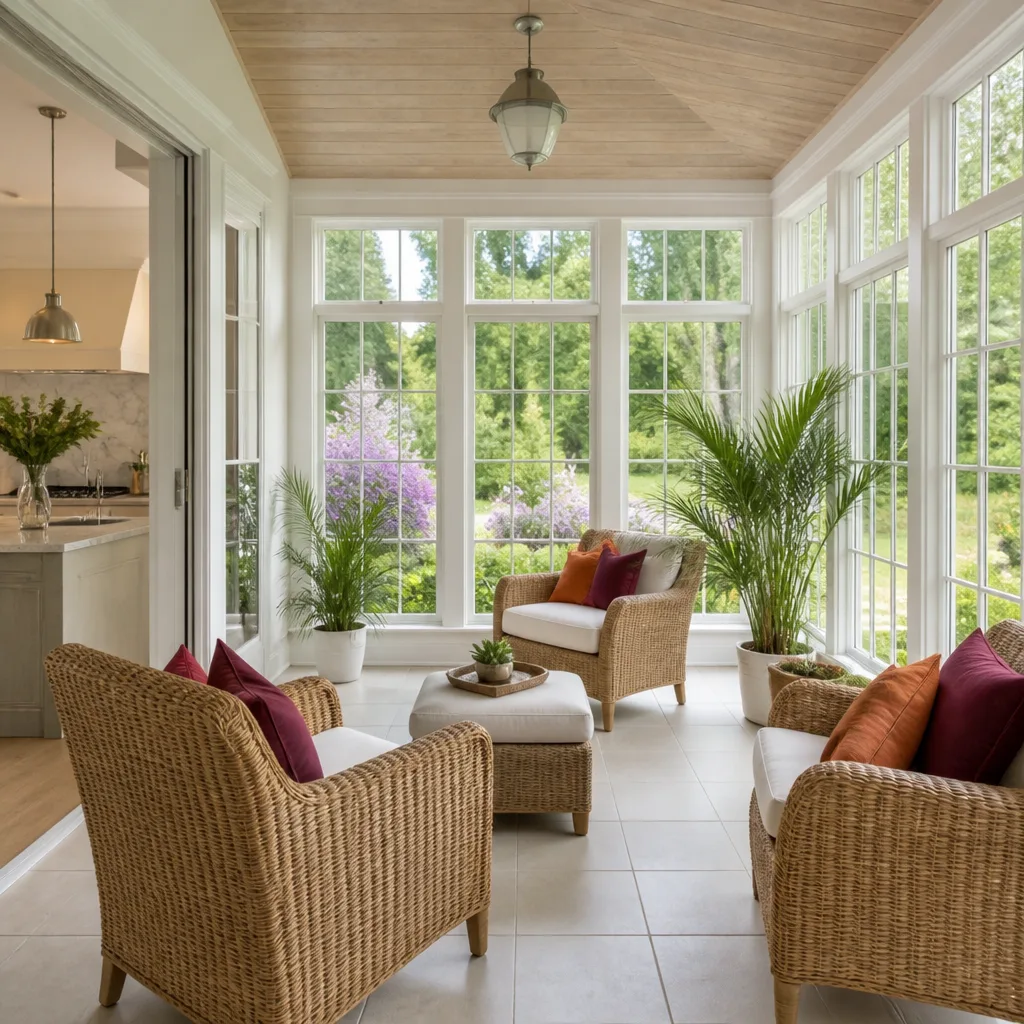
A properly compacted slab with correctly trenched utilities in Ventura should last the life of the structure it supports, which means 50-plus years for the concrete and 30 to 50 for buried PEX and PVC lines. The failures we see on older properties are almost always from shortcuts on compaction or backfill, not from the materials themselves. Call (831) 230-7250 if you suspect yours was cut short.
In some cases, yes. Hairline cracks can be epoxy-injected if there’s no ongoing movement, and minor settling can be corrected with slab jacking. But when the underlying soil hasn’t been stabilized or the slab lacks proper rebar, patching just buys you a year or two. We’ll tell you which situation you’re in before recommending any repair.
Most Ventura site prep and utility packages take three to seven working days once permits are approved and materials are on site. Trenching and rough-in usually account for two to three of those days, with the rest going to slab pour, cure time, and inspection scheduling. Permit approval timelines with the City of Ventura vary, and we’ll give you a realistic window when we quote the job.
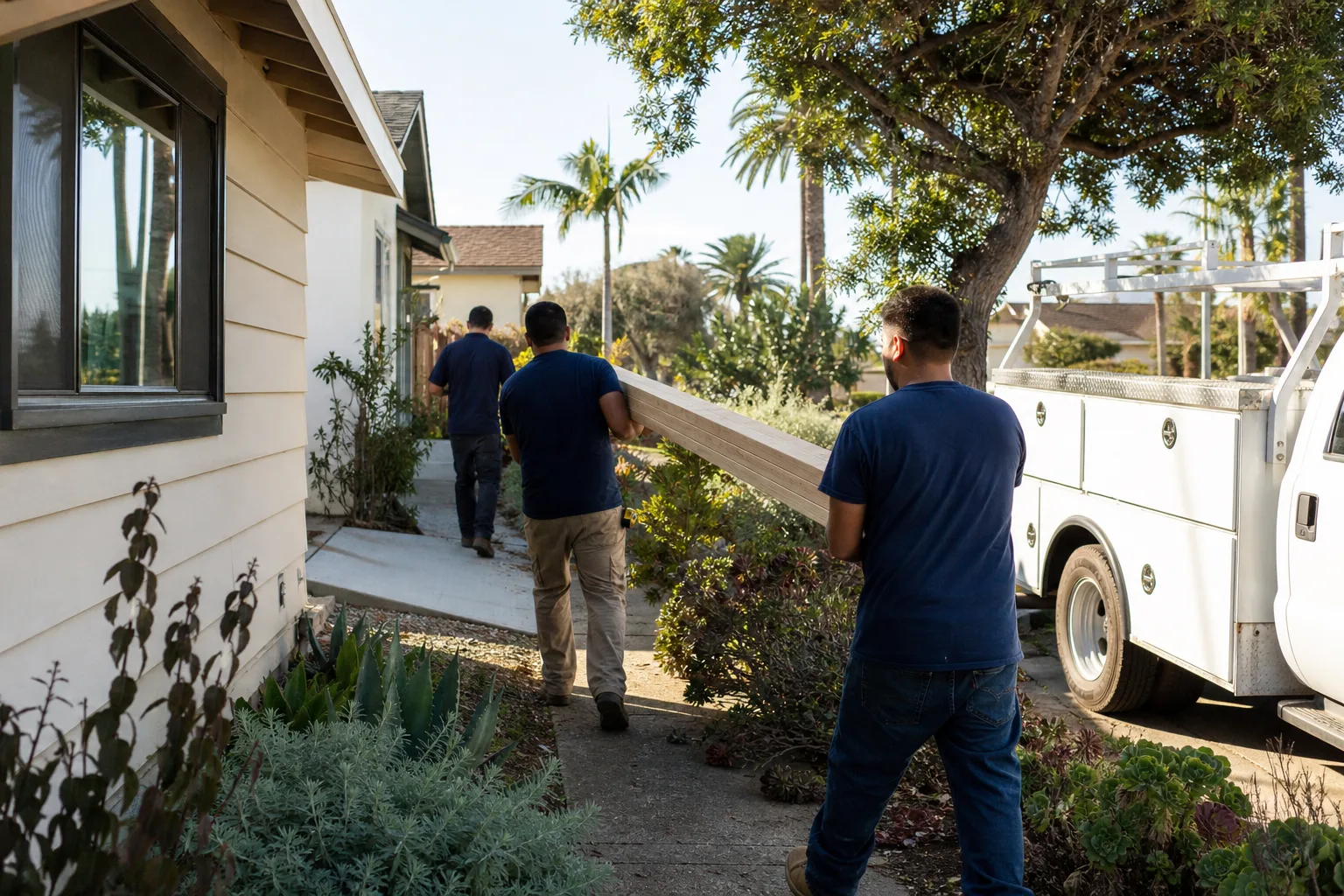
We keep common trenched utility components, subpanel hardware, drainage materials, and concrete supplies stocked on our trucks and in our Ventura yard. James Hardie siding and trim get ordered per job to match your exact color and profile, since stocking every Hardie SKU doesn’t make sense for anyone. We can have what’s needed on site within days, not weeks.
Contact Lodgewick ADU Ventura
If you’ve got a James Hardie project in Ventura and the prep work is holding you back, or if you’ve already got signs that the existing pad or utilities aren’t right, call (831) 230-7250 for a free site estimate. Russ Delmar and the crew will give you a written price and a straight answer on what it’ll take to get your site ready. Tell me what you need the space to do, and I’ll tell you what it actually costs to get there.
Written by Russ Delmar, Owner, Lodgewick ADU Ventura at Lodgewick ADU Ventura, serving Ventura and nearby areas.